

 By
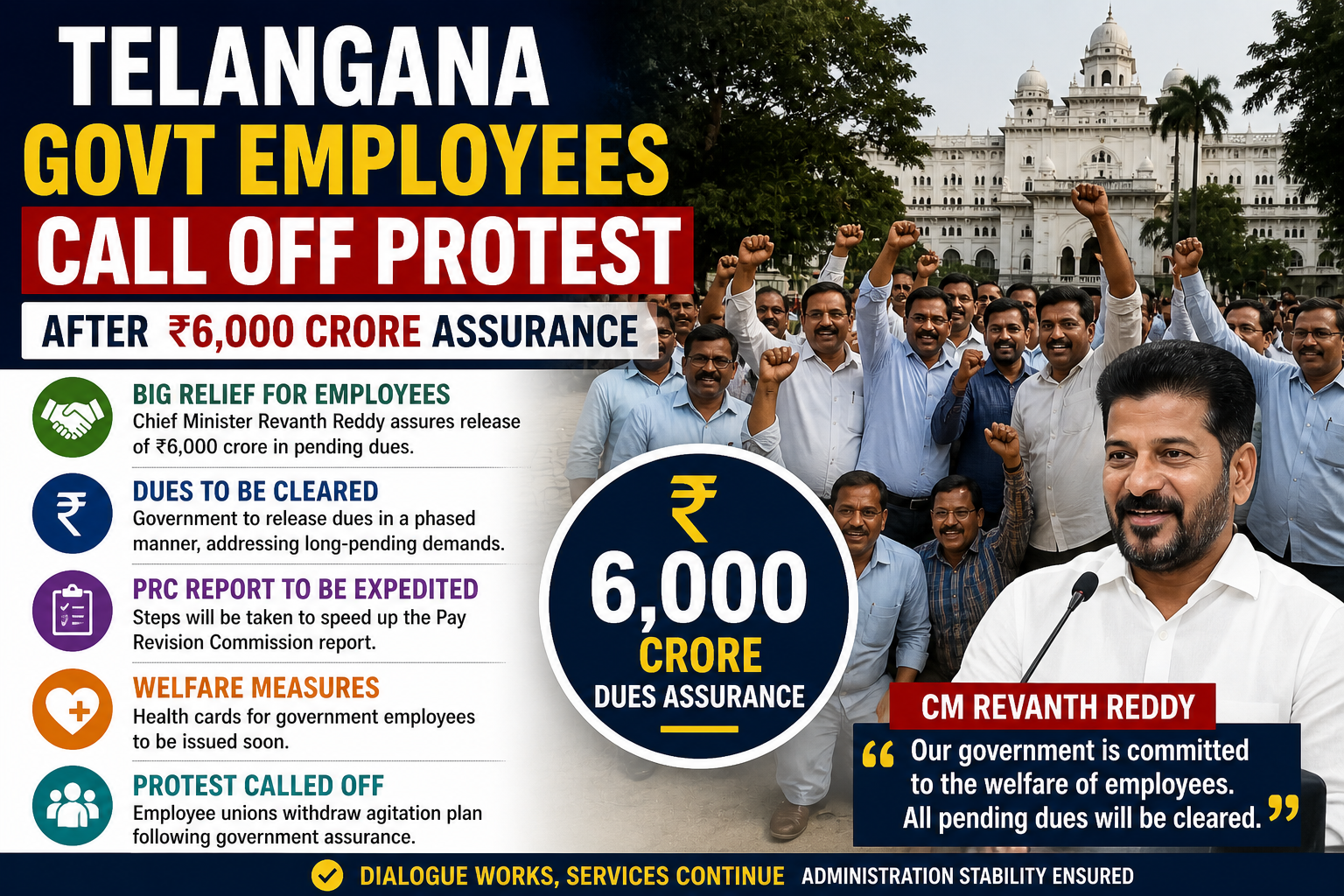
By In a significant relief for the administration of Telangana, government employees have called off their proposed protest after receiving assurances from Chief Minister A. Revanth Reddy regarding the release of pending dues worth ₹6,000 crore. The development marks a crucial breakthrough in negotiations between employee unions and the state government, preventing what could have been a large-scale disruption in public services.
The protest, which had been planned by various employee associations, was primarily centered around delays in clearing financial dues, including reimbursements, allowances, and other pending payments. Employees had also raised concerns regarding the implementation of the Pay Revision Commission (PRC) recommendations and the need for improved welfare measures. With mounting pressure and growing dissatisfaction among staff, the situation had the potential to escalate into a statewide agitation.

However, following a series of discussions, the Chief Minister assured that the government would release ₹6,000 crore to address the pending dues in a phased manner. This assurance appears to have restored confidence among employees, leading unions to withdraw their protest plans. The government also indicated that steps would be taken to expedite the PRC report and address long-standing demands related to salary revisions and benefits.
In addition to financial commitments, the administration has promised improvements in employee welfare initiatives. These include the issuance of health cards for government staff, which are expected to provide better access to medical services. Such measures are seen as part of a broader effort to strengthen the relationship between the government and its workforce, which plays a critical role in delivering public services across the state.
The decision by employees to call off the protest has immediate administrative benefits. A large-scale strike by government staff could have impacted essential services, including revenue administration, public health, education, and municipal operations. By resolving the issue through dialogue, the government has ensured continuity in governance and avoided inconvenience to the public.
From a political perspective, the development is significant for the ruling Congress government. Addressing employee concerns and preventing unrest helps reinforce its image as a responsive and employee-friendly administration. Government employees constitute an influential segment of society, and their satisfaction can have a broader impact on public perception and political support.
At the same time, the government now faces the challenge of fulfilling its commitments within the promised timeline. Timely release of funds and implementation of PRC recommendations will be closely monitored by employee unions. Any delay or deviation could revive dissatisfaction and lead to renewed protests. Therefore, maintaining transparency and consistent communication will be key to sustaining trust.
Experts note that such negotiations highlight the importance of fiscal management and prioritization in governance. Balancing employee welfare with overall budgetary constraints requires careful planning, especially when large financial commitments are involved. The government’s ability to manage these obligations while continuing development and welfare programs will be an important factor in its long-term performance.
The resolution also reflects the role of dialogue in addressing labour-related issues. Instead of confrontation, both the government and employee unions opted for discussions, leading to a mutually acceptable outcome. This approach not only prevented disruption but also set a precedent for handling similar issues in the future.
In conclusion, the withdrawal of the protest by Telangana government employees following the ₹6,000 crore assurance represents a positive step toward maintaining administrative stability and employee satisfaction. It underscores the importance of timely intervention, effective communication, and commitment to welfare in governance. As the government moves forward with its promises, the focus will remain on implementation and sustaining a cooperative relationship with its workforce.