

 By
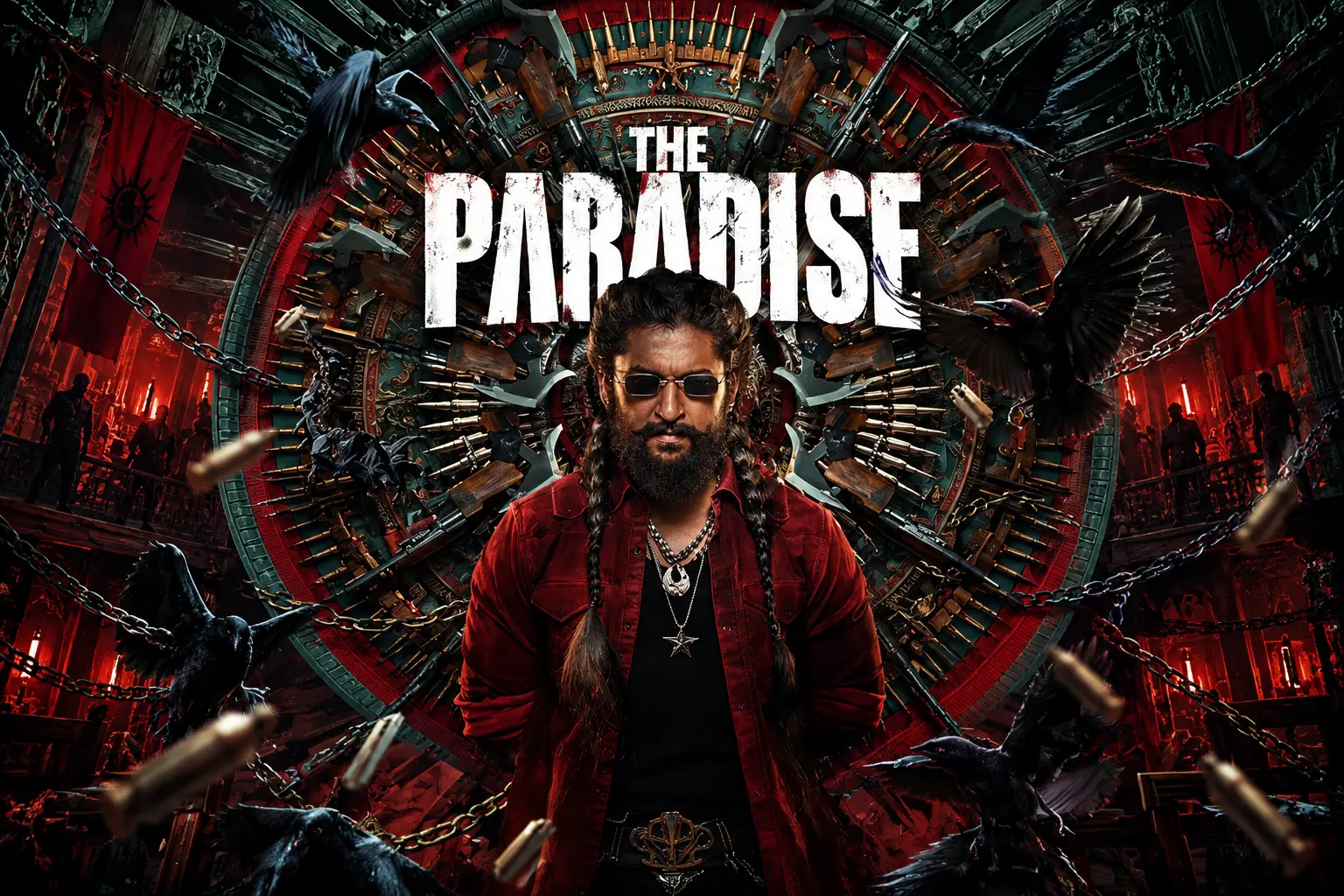
By The Paradise is a 2026 Telugu period action drama directed by Srikanth Odela, starring Nani, Mohan Babu, Kayadu Lohar, Raghav Juyal and Sonali Kulkarni. The film released worldwide on September 24, 2026, and marks the second collaboration between Nani and Srikanth Odela after Dasara. Set around the marginalized Savari community in Hyderabad’s Paradise area, the film combines social oppression, rebellion, family emotions and intense action.
The film has received mixed early reactions. Nani’s transformation and performance, the gritty world-building and the visual presentation have received praise, while the screenplay, editing and second-half narration have been criticized.
Story & Concept
The story revolves around the Savari community, who live under difficult conditions and struggle for recognition and identity. Malik, played by Mohan Babu, is the dominant power controlling the community.
His authority is challenged by Sammakka, while her son Jadal, played by Nani, returns after spending years in prison. Jadal carries anger and resentment and eventually becomes the person who challenges Malik’s power.
The basic conflict revolves around the community’s struggle for dignity and Jadal’s personal fight against an oppressive system. The premise gives the movie a serious social foundation beneath its mass-action treatment.
Performance
Nani is easily one of the biggest strengths of The Paradise.
His physical transformation, appearance and aggressive performance are a significant departure from many of his familiar roles. He completely commits to Jadal’s intensity and carries several of the film’s major action and emotional moments.
Mohan Babu brings authority and menace to Malik, while Raghav Juyal adds another strong presence to the film. Sonali Kulkarni’s role also contributes to the emotional side of the story.
Early audience reactions have particularly highlighted Nani’s performance, including his introduction and jail sequence.
Screenplay & Direction
Srikanth Odela’s world-building is one of the film’s biggest achievements.
The director creates a raw and visually distinctive environment around the Savari community. The first half establishes the characters, power structure and atmosphere effectively, giving the movie a strong foundation.
However, the screenplay becomes increasingly uneven after the interval. Instead of developing the central conflict between Jadal and Malik, the narrative begins relying heavily on violent sequences.
This is where the film loses some of the emotional strength established earlier. Several critics have pointed to the fragmented screenplay and lack of cohesion as major weaknesses.
Action & Mass Elements
If you’re watching The Paradise for raw action and mass moments, there are several sequences that deliver.
The film avoids the lighter commercial formula and maintains a dark, serious tone. The violence is intense, and Srikanth Odela clearly wants the action to feel brutal rather than glamorous.
The pre-interval and interval stretches have been highlighted positively in some reviews, while the second half becomes increasingly dependent on violence.
Emotional Elements
The mother-son relationship between Sammakka and Jadal is one of the more important emotional threads.
The film also attempts to give the community’s struggle an emotional foundation rather than treating it purely as a revenge story.
However, this emotional material doesn’t always receive enough development. As the second half becomes more action-heavy, the central emotional conflict begins to get overshadowed by the violence.
Cinematography & Visuals
Visually, The Paradise is one of the film’s stronger areas.
Ch Sai’s cinematography helps create the gritty period atmosphere, while the production design gives the film a large-scale identity.
Srikanth Odela uses strong compositions and a dark visual palette to establish the world of the Savaris. Even reviews critical of the screenplay have acknowledged the film’s visual ambition and distinctive atmosphere.
Music & Background Score
Anirudh Ravichander provides the music, and the songs have already generated considerable attention before release.
The songs work well as part of the film’s promotional and mass appeal, although some reviews feel the background score doesn’t always have the expected impact because the emotional writing underneath certain scenes isn’t strong enough.
The sound mix and dialogue clarity have also received criticism in some reviews.
Pacing & Editing
The film’s editing and narrative flow are among its weaker technical aspects.
The first half establishes the world effectively, but the second half becomes more fragmented. Some scene transitions can feel abrupt, and the story occasionally jumps from one violent sequence to another without giving the characters enough room to develop.
This affects the overall emotional connection and makes the movie feel less cohesive as it progresses.
Second Half & Climax
The second half is where The Paradise loses some of the momentum created earlier.
The film introduces additional references and developments while simultaneously increasing the amount of violence. Some reviewers felt that these elements don’t always integrate naturally with the central Savari storyline.
More importantly, the confrontation between Jadal and Malik doesn’t deliver the emotional and dramatic impact that the first half appears to promise.
The film has scale and spectacle, but the central conflict needed stronger writing to make the climax truly satisfying.
What Works
- Nani’s physical transformation and committed performance
- Strong world-building
- Gritty and distinctive visual presentation
- Interesting social backdrop
- Powerful first half
- Intense action sequences
- Mohan Babu’s commanding presence
- Raghav Juyal’s performance
- Strong production values
- Serious tone without unnecessary comedy
What Doesn’t Work
- Uneven second half
- Familiar mass-action template
- Screenplay lacks cohesion
- Excessive reliance on violence
- Jadal-Malik conflict doesn’t reach its full potential
- Some abrupt editing and transitions
- Emotional moments don’t always land
- Political references can feel disconnected from the main story
- Background score doesn’t always elevate the emotional scenes
Final Verdict
The Paradise is an ambitious film that clearly wants to create a distinctive world rather than deliver a routine commercial entertainer.
Srikanth Odela succeeds in building a raw, gritty and visually memorable setting, particularly during the first half. Nani completely transforms himself for Jadal and gives the film the kind of intensity the role demands.
However, the screenplay struggles to hold all of these elements together. After the interval, the movie becomes increasingly dependent on violence, while the central emotional conflict receives less attention. The confrontation between Jadal and Malik ultimately doesn’t deliver the impact that the setup promises.
There is a lot to admire in the film’s ambition, performances and visual treatment, but the writing doesn’t consistently support that ambition.
Overall Rating: 2.5/5
Story: ⭐⭐⭐
Screenplay: ⭐⭐½
Performances: ⭐⭐⭐⭐
Action: ⭐⭐⭐½
Emotions: ⭐⭐⭐
Cinematography: ⭐⭐⭐⭐
Music/BGM: ⭐⭐⭐½
Direction: ⭐⭐⭐
Climax: ⭐⭐½
Entertainment: ⭐⭐⭐
Overall: ⭐⭐⭐
Verdict: A visually ambitious and intense action drama anchored by Nani’s powerful performance, but an uneven screenplay and weaker second half prevent The Paradise from reaching its full potential.