


 By
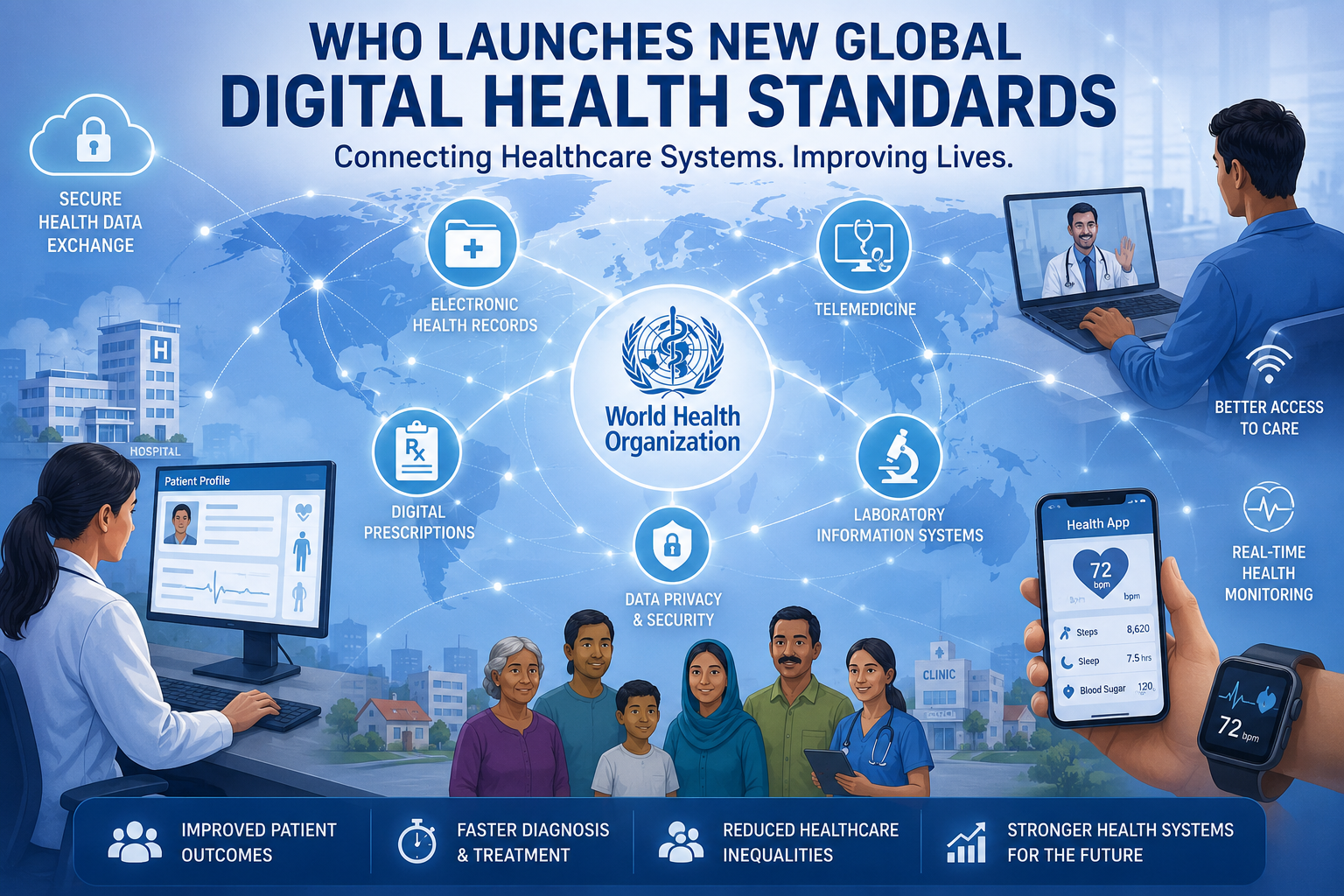
By The World Health Organization (WHO) is accelerating its efforts to build a more connected global healthcare system by promoting open digital health standards. These standards are designed to help hospitals, clinics, laboratories, pharmacies, and healthcare providers securely exchange patient information across different digital platforms. The initiative aims to eliminate data silos, improve healthcare quality, and ensure that patients receive continuous care regardless of where they seek treatment.
Today, many hospitals use different software systems that cannot easily communicate with one another. As a result, patient records often remain isolated within a single hospital, forcing patients to repeat medical tests or carry paper documents when visiting another healthcare provider. WHO’s digital health standards address this challenge by encouraging countries to adopt interoperable health systems that can securely share medical records while protecting patient privacy.
The initiative also supports the use of electronic health records (EHRs), digital prescriptions, laboratory information systems, vaccination databases, and telemedicine platforms under a common framework. This enables healthcare professionals to access accurate patient information in real time, leading to faster diagnoses, better treatment decisions, and improved emergency care.Follow Us On Instagram
Artificial intelligence is expected to play a significant role in this transformation. AI-powered healthcare systems can analyze large volumes of patient data, identify disease risks earlier, and assist doctors in making evidence-based clinical decisions. Combined with standardized digital records, AI can significantly improve healthcare efficiency while reducing medical errors.
The adoption of global digital health standards is particularly beneficial for developing countries, where healthcare infrastructure is still evolving. Governments can build modern digital healthcare systems from the ground up, improving access to medical services in rural and underserved communities. Remote consultations, digital referrals, and cloud-based medical records can help bridge the gap between patients and healthcare providers.
Data privacy and cybersecurity remain central to WHO’s recommendations. The organization emphasizes secure data encryption, patient consent, and strong governance policies to ensure that health information remains confidential and protected from cyber threats.
Experts believe that connected digital health systems will become the foundation of future healthcare. As more countries adopt international standards, patients will experience smoother healthcare journeys, healthcare providers will collaborate more effectively, and public health agencies will gain better insights to respond to disease outbreaks and health emergencies.
This initiative marks a significant step toward creating a globally connected healthcare ecosystem where technology improves accessibility, efficiency, and patient outcomes. As digital transformation continues, WHO’s efforts are expected to shape the future of healthcare for billions of people around the world.
Follow Us On Instagram