 By
By AI PCs Are Changing Computers in 2026: The Next Generation of Computing
The computer industry is going through one of its biggest transformations in years. In 2026, the focus is no longer only on faster processors, larger storage and better displays. Artificial intelligence is becoming a central part of the personal computer, changing how laptops and desktops handle everyday tasks, creative work, productivity and entertainment.
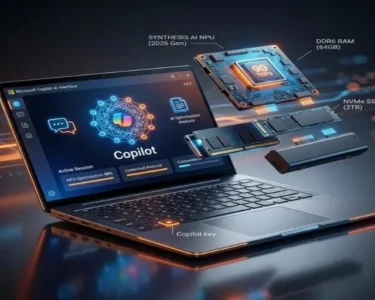
One of the biggest trends right now is the rapid development of AI PCs. These computers include dedicated neural processing units (NPUs) designed to handle AI workloads locally. Instead of sending every AI request to a cloud server, compatible tasks can increasingly be processed directly on the computer. This can improve responsiveness while also offering potential privacy and connectivity benefits.
AI Is Moving Directly Onto Computers
The shift toward local AI is becoming particularly visible among major computer manufacturers. ASUS recently introduced new ProArt laptops and a mini PC using NVIDIA’s RTX platform, targeting creators and developers who want powerful local AI capabilities. ASUS says its RTX-powered systems can handle large AI models, 3D workloads and AI video-generation tasks.
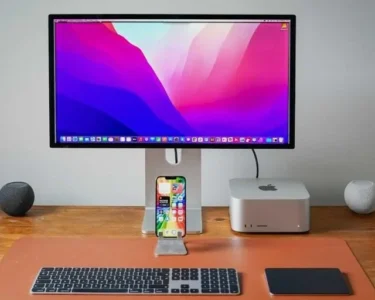
Apple is taking a similar approach with its latest high-end Macs. Recent Mac mini and Mac Studio systems are being positioned for AI developers and businesses that want to run demanding AI workloads locally rather than relying entirely on cloud services. Reuters reported that Apple demonstrated a trillion-parameter AI model running across four Mac Studios.
This represents an important change in the role of the personal computer. A PC is increasingly becoming not just a device for running traditional applications, but a platform capable of running sophisticated AI tools directly.
Googlebooks Bring AI and Android Together
Another major development this week is Google’s new Googlebook laptop platform. Google has opened pre-orders for new premium laptops starting at $899, with systems from manufacturers including Acer, ASUS, Dell, HP and Lenovo.
The new computers are designed around Google’s Gemini AI and closer integration with Android smartphones. Googlebooks are expected to offer features such as AI-assisted writing, screen-based questions and improved continuity between phones and laptops. The first models are scheduled to become available in October.
This shows another important direction for computers: cross-device integration. Users increasingly expect their laptop, smartphone and other devices to work together instead of operating as separate products.
Performance Is Still a Major Priority
Although AI is receiving much of the attention, traditional computer performance remains important. Modern laptops are becoming more capable while manufacturers continue to work on battery efficiency, thermal management and compact designs.
Gaming and creator laptops are particularly demanding because they need powerful CPUs and GPUs while managing heat and power consumption. At the same time, thin-and-light laptops are focusing on balancing performance with portability and long battery life.
Mini PCs are also becoming more popular because they provide desktop-class computing in much smaller enclosures. The latest models are targeting offices, home users, developers and creators who do not necessarily need a large traditional desktop tower.
Memory Costs Could Affect PC Prices
There is also a challenge facing the computer industry: memory supply and pricing. IDC has reported that rising demand for DRAM and NAND memory from AI infrastructure is putting pressure on the broader PC market. These component costs can eventually influence computer specifications and retail prices.
That means consumers may increasingly have to consider not just processor speed, but also RAM capacity, storage requirements and upgradeability when purchasing a new computer.
What to Expect From Computers Next
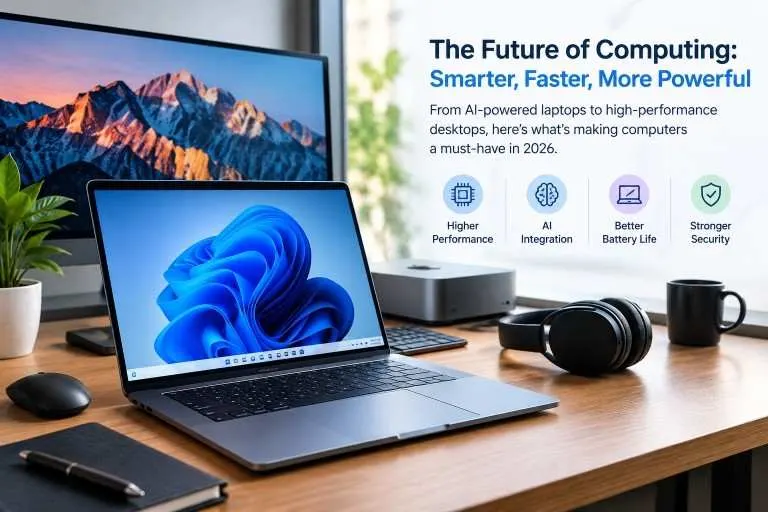
The computer of 2026 is becoming more intelligent, connected and capable. AI acceleration, local processing, longer battery life and better integration with smartphones are becoming major design priorities.
For everyday users, this could mean computers that can summarize information, assist with writing, organize files and interact more naturally with applications. For professionals and developers, local AI processing could provide new opportunities to work with advanced models without depending entirely on cloud infrastructure.
The biggest change is that AI is moving from being a software feature to becoming part of the computer’s hardware architecture. As manufacturers continue developing AI chips, dedicated NPUs and more powerful GPUs, computers are evolving from passive tools into increasingly intelligent computing platforms.
With new AI-focused laptops, mini PCs and cloud-computing services appearing across the market, 2026 is shaping up to be an important year for personal computing. The next generation of computers will not simply be faster—they will be designed to understand, assist and work alongside users in entirely new ways.