


 By
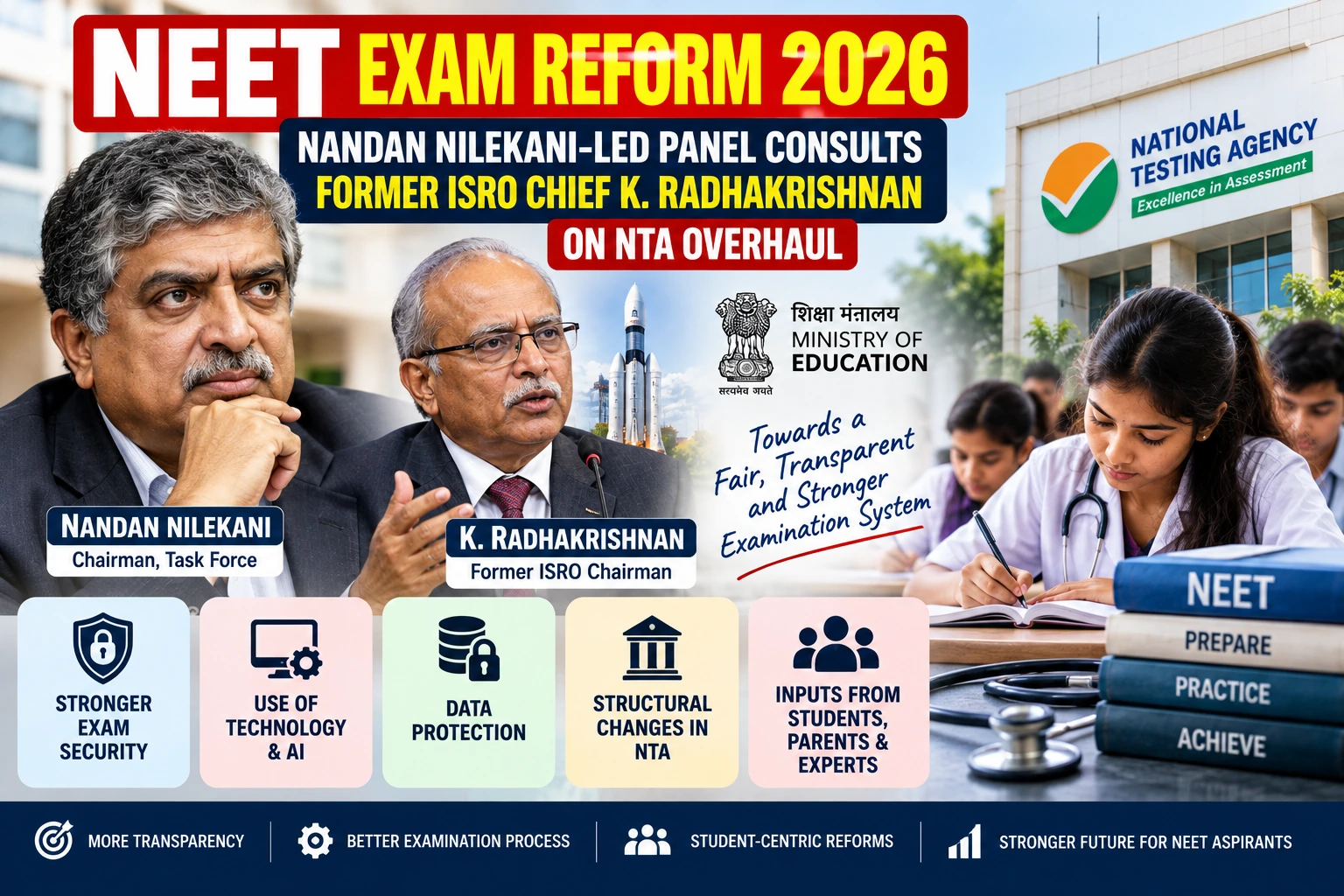
By The National Eligibility-cum-Entrance Test (NEET) is once again at the centre of discussions over examination reform in India. A high-powered task force led by Nandan Nilekani is examining ways to strengthen the country’s examination system and overhaul the functioning of the National Testing Agency (NTA).
As part of this process, the task force has consulted former ISRO chairman K. Radhakrishnan, who previously headed a government committee established after the 2024 NEET-UG paper-leak controversy. The latest development is significant for NEET aspirants because the recommendations being examined could influence the security, technology, administration and overall conduct of future national-level entrance examinations.
However, students should note that the proposed reforms are not yet final rules. The Nilekani-led task force is still consulting stakeholders and preparing its recommendations.
Why Is the NTA Being Reviewed?
The NTA conducts several major national-level examinations, including NEET-UG. Because millions of students depend on these examinations for admission to higher education, examination security and reliability are particularly important.
The 2024 NEET-UG controversy exposed concerns surrounding examination security and the handling of confidential examination material. Following the controversy, the Centre constituted a committee headed by K. Radhakrishnan to examine weaknesses in the examination system and recommend reforms.
The Radhakrishnan Committee submitted its recommendations in October 2024. The recommendations covered areas such as examination security, data protection and the structure and functioning of the NTA. A later High Powered Steering Committee was also established to monitor implementation of the recommendations.
The subsequent controversies surrounding national examinations have led to renewed discussions about whether deeper and more permanent changes are required.
What Is the Nilekani-Led Task Force Doing?
The new high-powered task force was constituted in July 2026. It is examining the existing examination system and reviewing earlier recommendations on strengthening the NTA.
The panel has consulted members associated with the earlier Radhakrishnan Committee and is also seeking views from a broad range of stakeholders.
According to recent reports, suggestions have been invited from students, parents, teachers, academic institutions, subject-matter experts, industry organisations and examination-conducting bodies. The aim is to gather perspectives from people directly involved with the examination system before final recommendations are prepared.
This consultation process indicates that the proposed overhaul is intended to examine the examination system more broadly rather than focusing only on one specific incident.
What Areas Could See Changes?
The exact reforms will become clear only after the task force submits its recommendations and the government decides which proposals to implement. However, reports indicate that the review covers several important areas.
1. Examination Security
Security of question papers and other confidential examination material is one of the major areas under review.
The objective is to reduce the possibility of unauthorised access, leaks or manipulation. Stronger security procedures could potentially cover the preparation, storage, transportation and distribution of examination material.
2. Data Protection
The use of technology in modern examinations means that large quantities of candidate information are handled digitally.
The reform process is therefore also examining data protection and digital security. Protecting personal information and examination-related data is increasingly important as testing systems become more technology-driven.
3. Technology in Examinations
Technology could play a greater role in monitoring and securing examination processes.
Recent reporting on the NTA overhaul has highlighted measures involving cybersecurity, artificial intelligence-based monitoring and stronger security arrangements at sensitive NTA facilities. The agency has also been reported to be working with cybersecurity and examination-security experts.
These developments are part of the broader effort to improve the security of high-stakes examinations.
4. NTA’s Institutional Structure
The reform discussion is not limited to examination-day arrangements.
The Supreme Court has emphasised that examination reforms need to become institutionalised rather than relying on temporary or ad-hoc measures. The Centre has also been asked to provide information about steps being taken to implement recommendations from both the Radhakrishnan Committee and the Nilekani-led task force.
This could lead to discussions about staffing, specialised divisions, infrastructure and the long-term functioning of the NTA.
What Does This Mean for NEET Aspirants?
For students preparing for NEET, the most important point is that the current examination process should not be assumed to have changed simply because the reform task force is working on recommendations.
Students should continue preparing according to the officially notified NEET syllabus, examination pattern and instructions issued by the NTA and other competent authorities.
The official NEET website currently publishes examination notices, answer keys, results and other candidate-related information. Students should use official notifications for confirmed changes rather than relying on social-media posts or unofficial claims.
If new rules are approved for future NEET examinations, they are expected to be communicated through official notifications before candidates are required to follow them.
Supreme Court’s Role in NEET Reforms
The examination reform process is also being closely watched by the Supreme Court.
In recent proceedings, the Court sought updates from the government and NTA regarding implementation of recommendations relating to examination reforms. The Court has stressed the importance of creating a permanent and reliable examination structure.
The Centre told the Supreme Court in September that the Nilekani-led panel had conducted extensive consultations and was expected to submit its first interim report by the end of the month.
Therefore, the coming weeks could be important for understanding what recommendations emerge from the task force.
What Students and Parents Should Watch
NEET aspirants and parents should keep an eye on the following developments:
- The Nilekani-led task force’s interim and final recommendations
- Government decisions on proposed NTA reforms
- Any changes to NEET examination procedures
- New examination-security measures
- Official NTA notifications
- Future Supreme Court directions related to examination reforms
- Changes, if any, in the registration, examination or evaluation process
Students should avoid making preparation decisions based solely on unverified reports.
Will NEET 2027 Rules Change?
At present, it is too early to state that a particular new NEET 2027 rule has been officially introduced because the reform process is still underway.
The task force is reviewing the examination system and consulting stakeholders. Its recommendations must subsequently be considered by the government and implemented through appropriate official mechanisms.
Therefore, headlines suggesting that all proposed reforms have already become mandatory should be treated cautiously.
Conclusion
The consultation between the Nandan Nilekani-led task force and former ISRO chairman K. Radhakrishnan marks another stage in India’s continuing effort to strengthen its national examination system.
The earlier Radhakrishnan Committee had examined weaknesses following the 2024 NEET-UG controversy and submitted recommendations covering examination reform, security, data protection and the functioning of the NTA. The new task force is now reviewing those recommendations while gathering additional views from students, parents, educators, experts and other stakeholders.
For NEET aspirants, the key message is simple: no unconfirmed reform should be treated as a final examination rule. Students should continue their preparation according to official NTA instructions and wait for formal announcements regarding any changes.
The larger objective of the reform process is to build an examination system that is secure, transparent, technology-enabled and capable of handling India’s large-scale entrance examinations reliably. As the Nilekani-led panel prepares its recommendations, students, parents and educators will be watching closely for the next phase of NEET and NTA reforms.
Follow Us On Instagram.