 By
By Your gut does much more than digest food. It plays an important role in nutrient absorption, immune function and communication between the digestive system and the brain.
Gut health and the gut microbiome are becoming major topics in modern nutrition research. Understanding how food choices affect the microorganisms living in our digestive system can help us make better everyday health decisions.
1. 🧬 What Is the Gut Microbiome?
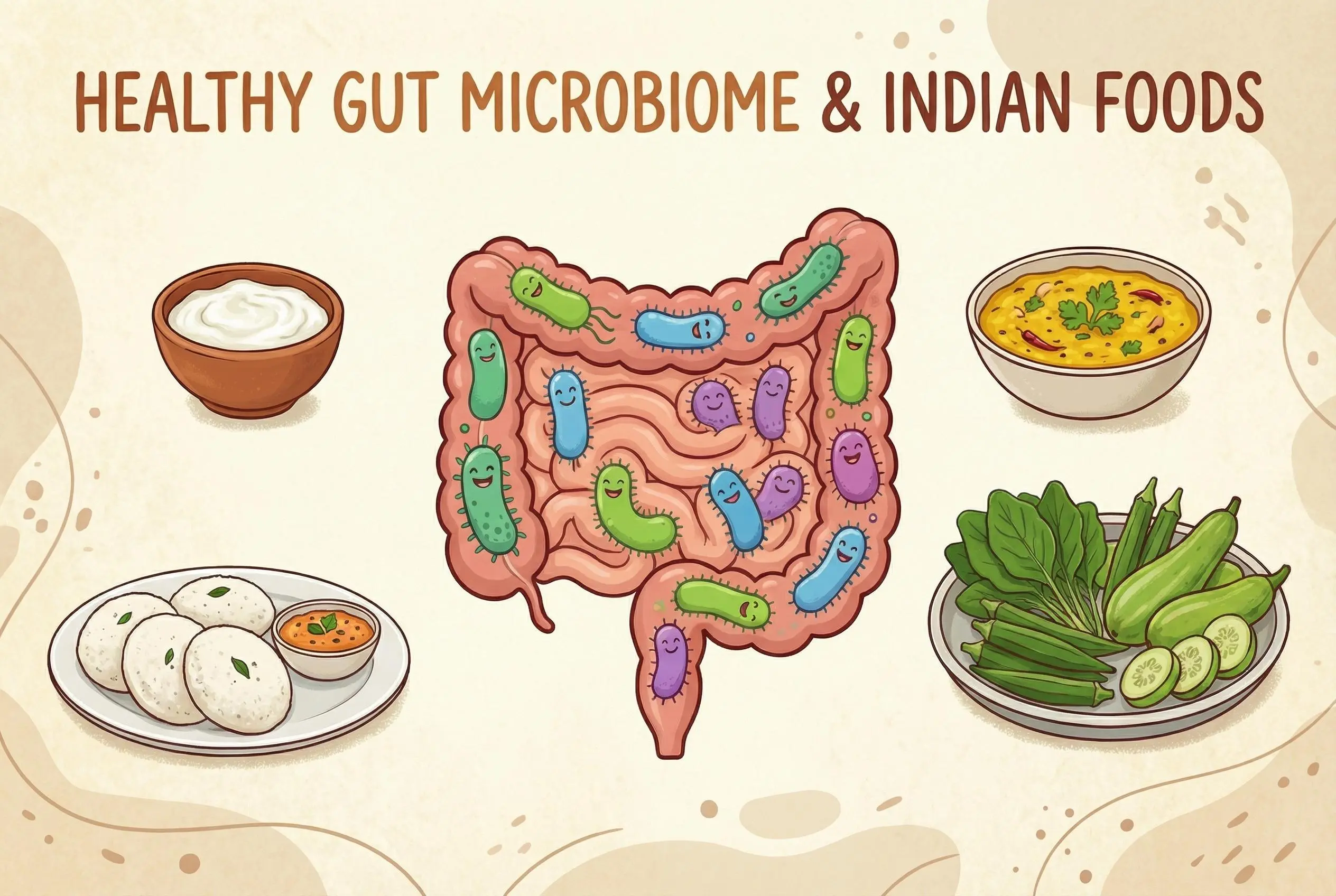
The gut microbiome refers to the community of microorganisms, including bacteria, that live in our digestive tract.
These microorganisms help with:
- Breaking down certain types of food.
- Supporting normal digestive functions.
- Producing certain useful substances.
- Interacting with the immune system.
A diverse gut microbiome is generally associated with good health, although there is no single ideal microbiome for everyone.
2. 🥗 Foods That Support Gut Health
Your everyday food choices can influence your gut microbiome.
Some useful options include:
- Curd: Contains live cultures in some varieties.
- Idli and dosa: Fermented foods made using traditional methods.
- Bananas: Provide fibre and resistant starch, depending on ripeness.
- Oats: Contain soluble fibre.
- Vegetables: Supply different types of dietary fibre.
- Beans and lentils: Provide fibre and plant protein.
- Nuts and seeds: Contribute fibre and healthy fats.
3. 🦠 Fermented Foods Are Getting More Attention
Fermented foods contain microorganisms or fermentation products that may support digestive health.
Popular examples include:
- Homemade curd
- Idli
- Dosa
- Fermented vegetables
- Traditional fermented foods
Recent Harvard Health coverage (September 14, 2026) discusses growing research into fermented foods and their possible digestive-health benefits.
Harvard Health
4. 🧠 The Gut–Brain Connection
Did you know your digestive system and brain communicate with each other?
This is known as the gut–brain axis.
Researchers are studying how gut microorganisms may interact with:
- Mood and emotional wellbeing
- Stress responses
- Appetite regulation
- Digestive functions
However, gut health should not be treated as a guaranteed cure for anxiety, depression or other mental health conditions.
5. 🚫 Habits That May Affect Gut Health
Some everyday habits can negatively affect digestive health:
- Eating very little dietary fibre.
- Frequently consuming highly processed foods.
- Drinking insufficient fluids.
- Ignoring persistent constipation.
- Taking antibiotics without medical advice.
- Making sudden, extreme dietary changes.
6. 🌾 Fibre Is the Key to a Healthy Gut
Dietary fibre supports digestion and helps maintain regular bowel movements.
WHO recommends that adults and children over 10 aim for at least 25 grams of naturally occurring dietary fibre daily.
- Oats
- Apples and guavas
- Beans and chickpeas
- Green vegetables
- Chia and flaxseeds
- Whole grains
Increase fibre gradually and drink adequate fluids to help avoid bloating.
7. 🔬 Latest Research: Diet Can Influence Gut Bacteria
A study published in Nature Medicine in March 2026 examined diet and gut microbiome data from 10,068 participants.
Researchers found significant associations between dietary patterns and gut microbial diversity and composition. The study also explored the potential for personalised nutrition strategies.
Nature Medicine
This research adds to the growing understanding that different dietary patterns can influence the microorganisms living in our gut.
8. 🚨 When Should You Consult a Doctor?
Don’t assume every digestive problem is caused by an unhealthy gut.
Seek medical advice if you experience:
- Persistent abdominal pain.
- Frequent diarrhoea or constipation.
- Blood in your stool.
- Unexplained weight loss.
- Persistent bloating or changes in bowel habits.
Avoid self-prescribing probiotics or digestive supplements without understanding the cause of your symptoms.
“A healthy gut starts with everyday food choices, not expensive supplements.”
Build a digestive-friendly routine with:
🥗 Fibre-rich foods + 🥛 Fermented foods + 💧 Adequate hydration + 🚶 Regular movement + 😴 Good sleep.
Gut health is not about following one viral diet. It is about maintaining a balanced, varied and sustainable eating pattern.
This article is for general health awareness and does not replace medical advice.
Follow Us On Instagaram