 By
By Apple is heading into October 2026 with one of its most interesting product cycles in years. After a major September packed with new iPhones, Apple Watch models and AirPods, the company is now turning attention toward artificial intelligence, smart-home technology and new hardware. For technology enthusiasts, Apple’s October roadmap could become one of the biggest electronics stories of the month.
The biggest theme surrounding Apple right now is artificial intelligence. The company has already begun rolling out its next generation of Apple Intelligence and Siri AI across its software ecosystem. Apple says its new Siri is designed to understand personal context, recognize what is happening on screen and perform more useful actions across apps. These capabilities are rolling out across iPhone, iPad, Mac, Apple Watch and Apple Vision Pro.
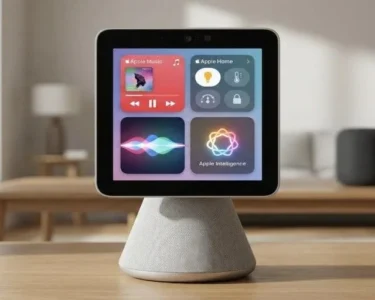
That AI push could become even more important as Apple expands into smart-home products. Reports indicate that Apple is preparing a new smart-home hub with a display, alongside updated versions of the HomePod mini and Apple TV. The rumored smart-home hub is expected to place Siri AI at the center of household interactions, potentially allowing users to control devices, access information and receive personalized content from one location.
This represents a significant change for Apple. While companies such as Amazon and Google have spent years developing smart-home ecosystems, Apple has remained comparatively quiet in this category. A dedicated Apple smart display could help the company connect its existing products—including iPhones, Apple Watches, AirPods and Macs—with a more complete home experience.
Apple’s latest iPhone lineup is another major part of the current electronics conversation. The company recently introduced the iPhone 18 Pro and iPhone 18 Pro Max, while also unveiling the iPhone Duo, Apple’s first foldable iPhone. Apple describes the iPhone Duo as featuring a breakthrough foldable design intended to combine portability with a larger display experience.
The iPhone Duo is particularly important because foldable smartphones have become increasingly competitive. Apple entering this category gives consumers another premium option and could encourage further innovation in display technology, durability and mobile design.
The Mac lineup is also attracting attention. Apple has already introduced M5-based Macs during 2026, while reports suggest that the company is preparing an even more ambitious MacBook Pro redesign. A future MacBook Pro is reportedly expected to feature an OLED touchscreen, a lighter design and other visual changes. These details remain based on reports rather than a completed Apple announcement, so they should be treated as expectations rather than confirmed specifications.
For Apple, the bigger story is not simply individual devices. It is the way AI could connect the entire ecosystem. A smarter Siri can potentially make an iPhone more useful, while the same intelligence can extend to Macs, watches and smart-home products. Apple’s advantage is that it controls both hardware and software, giving the company an opportunity to create a more unified experience.
October could therefore be an important month for Apple. Reports currently point to an October 13 product event focused on smart-home hardware, although Apple’s plans should be considered unconfirmed until officially announced.
Overall, Apple’s direction in late 2026 appears clear: AI is moving from being a feature inside individual products toward becoming a central layer connecting the entire Apple ecosystem. With the iPhone Duo, expanding Apple Intelligence and potential smart-home devices on the horizon, Apple is entering a new phase where innovation may be less about one revolutionary gadget and more about how multiple devices work together.
For electronics fans, October 2026 could be the month when Apple shows just how seriously it intends to compete in the next generation of AI-powered consumer technology.