

 By
By Published: October 10, 2026
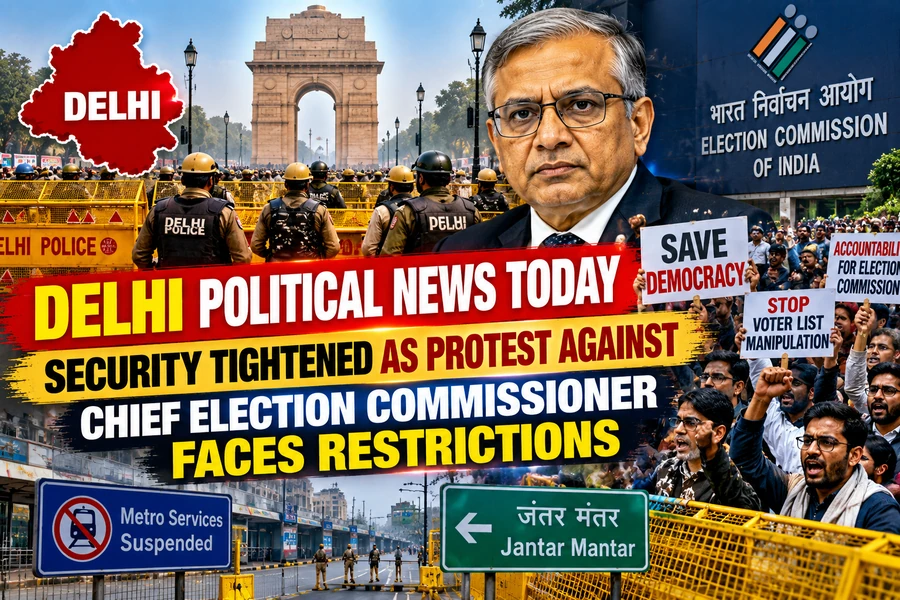
New Delhi witnessed heightened political tension on October 10 as authorities took extensive security measures ahead of a planned protest against Chief Election Commissioner Gyanesh Kumar. The demonstration was organised by the Cockroach youth movement and focused on allegations concerning the revision of electoral rolls and demands for accountability from the Election Commission.
According to Reuters, police detained hundreds of protesters, opposition leaders and reporters as security forces restricted access to parts of the national capital. The developments have renewed debate over the balance between public demonstrations, election administration and the maintenance of public order.
Security Measures Across the Capital
Authorities deployed thousands of police and paramilitary personnel in parts of Delhi ahead of the planned gathering at Jantar Mantar. Reuters reported that the area was sealed off before the demonstration could take place as originally planned.
Mobile internet services were suspended in parts of the central business district, while several metro stations and markets were closed or affected by restrictions, according to the report.
The security measures were intended to prevent the planned gathering from proceeding in the restricted area. However, the restrictions also affected access to public spaces and transportation, bringing attention to the practical consequences of large-scale security deployments in the capital.
Despite the restrictions, smaller demonstrations took place at other locations, including near Mahatma Gandhi’s memorial, Reuters reported.
Why the Protest Was Organised
The protest centred on the Special Intensive Revision (SIR) of electoral rolls and allegations that the process could unfairly affect some voters. Protest organisers and opposition figures called for accountability from Chief Election Commissioner Gyanesh Kumar.
Electoral-roll revision is intended to verify voter information and maintain accurate voter lists. However, disputes can arise over the process, particularly when political parties or citizens question whether eligible voters could be removed incorrectly.
Critics of the current process have raised concerns about possible irregularities and the impact on voters’ participation. The Election Commission and the authorities responsible for election administration have a central role in maintaining accurate electoral records and addressing complaints through established procedures.
Claims of deliberate electoral manipulation remain contested and should be distinguished from independently verified evidence. A clear assessment requires examination of official records, documented complaints, responses from the Election Commission and any findings by competent authorities.
Opposition Leaders and Protesters Detained
Reuters reported that police detained several people in connection with the planned demonstration. The Cockroach movement also said its founder, Abhijeet Dipke, and senior leaders Saurav Das and Ashutosh Ranka were detained after arriving in Delhi.
The detentions prompted criticism from protest organisers and supporters, who questioned the restrictions placed on the demonstration. The authorities’ actions took place amid concerns about public order and security surrounding the planned gathering.
The incident has placed the relationship between political protest and law enforcement under renewed scrutiny. Demonstrations are a feature of democratic political life, while authorities may impose lawful restrictions in response to specific public-order and security concerns. The circumstances and legal basis of particular restrictions are therefore important when assessing such incidents.
The Debate Over Electoral Transparency
The controversy highlights the importance of public confidence in electoral administration. Accurate voter lists are essential for elections, but the revision process also needs transparent procedures through which eligible voters can check their registration details and seek corrections when necessary.
Political parties, civil society groups and election officials have different responsibilities in this process. Parties may raise documented concerns, voters can verify their enrolment and submit claims or objections under the applicable rules, and election authorities must administer the process according to the law.
Independent verification is particularly important when allegations concern the fairness of elections. Public discussion should distinguish between documented errors, allegations made by political actors and conclusions established through official investigations or judicial proceedings.
What Happens Next?
The developments in Delhi may continue to shape discussions about election administration, protest permissions and the rights of political groups to assemble. The immediate questions include the circumstances of the detentions, the scope and duration of restrictions, and how complaints concerning electoral-roll revision will be addressed.
Further developments will depend on official decisions, responses from political parties and any subsequent legal proceedings or public statements.
Conclusion
The October 10 events in New Delhi underline the continuing debate over electoral transparency and the right to protest. While authorities have responsibilities relating to public safety, concerns about voter-list revision require clear explanations and effective channels for addressing genuine grievances.
The issue remains politically sensitive, and its implications should be assessed using verified information from the Election Commission, relevant authorities, courts where applicable, and reliable independent reporting.
Follow Us On Instagram