

 By
Global RAM Shortage in 2026: How AI Technology Is Changing the Future of Computers
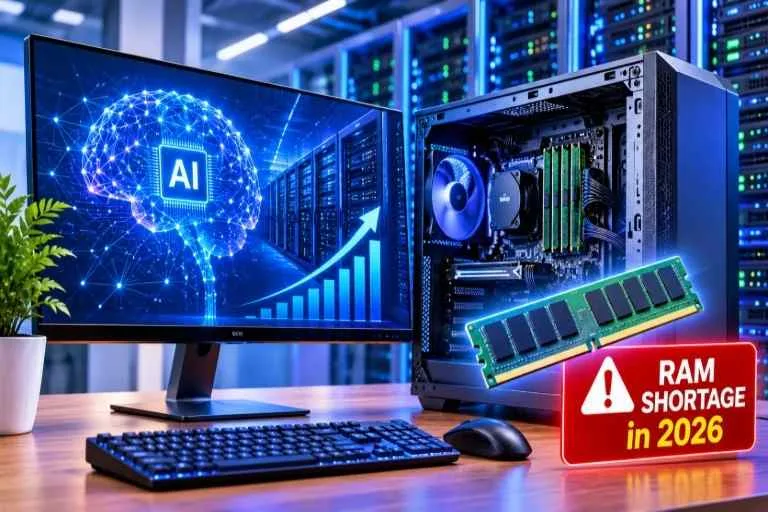
The computer industry is facing a major challenge in 2026 as the growing demand for artificial intelligence technology puts pressure on the global memory market. RAM, also known as Random Access Memory, is one of the most important components in computers, laptops and smartphones. However, increasing demand from AI companies and large data centres is creating concerns about memory availability and rising hardware prices.
On November 1, 2026, discussions about the global memory shortage gained further attention after OpenAI CEO Sam Altman shared controversial comments about how computer memory should be used. His remarks raised an important question: should limited memory resources be used in personal computers or allocated to large AI data centres? Technology News – The Indian Express
Let’s explore why RAM is becoming such an important topic and how this situation could affect computer users.
1. Why Is There a Global RAM Shortage?
RAM allows computers to temporarily store information that the processor needs to access quickly. It plays an important role in running applications, browsing websites, editing videos, playing games and multitasking.
The growing popularity of artificial intelligence has significantly increased the demand for memory chips. AI data centres require large amounts of high-performance memory to train and operate advanced AI models.
Major technology companies are investing heavily in AI infrastructure, creating additional demand for memory products.
According to recent industry reporting, limited manufacturing capacity and increased demand from AI companies are putting pressure on the supply of memory chips.
2. Sam Altman’s Comments Create Debate
OpenAI CEO Sam Altman recently sparked a discussion by suggesting that it is inefficient for large amounts of RAM to remain unused in personal computers when the same resources could be used more intensively in AI data centres.
His argument focuses on memory utilisation. Many personal computers have substantial memory capacity that may not be fully used throughout the day, while AI data centres require significant computing resources.
However, this opinion has generated debate among computer enthusiasts, gamers and developers.
Many users believe that having sufficient RAM in personal computers is essential for performance, privacy and independence from cloud services.
The discussion highlights an important challenge for the technology industry: balancing the needs of individual computer users with the growing requirements of AI infrastructure.
3. Computer and Laptop Prices Could Increase
One major concern surrounding the RAM shortage is its potential effect on computer prices.
Memory is an important part of the manufacturing cost of laptops, desktops and other electronic devices. When memory prices increase, manufacturers may face higher production expenses.
These additional costs could eventually affect retail prices.
Students, professionals and businesses planning to purchase new computers may need to consider their budgets carefully.
Gaming computers and high-performance laptops could also face pressure because they often require larger memory configurations.
4. AI Data Centres Are Changing Hardware Demand
AI data centres are becoming larger and more powerful as companies develop advanced artificial intelligence systems.
These facilities require specialised processors, GPUs, high-bandwidth memory and advanced storage solutions.
The growing investment in AI infrastructure is also affecting other computer components.
Recent reporting suggests that printed circuit boards and chip substrates are facing supply pressure as manufacturers prioritise high-margin AI hardware. The Times of India
This demonstrates how the AI boom is influencing the entire electronics supply chain, not just memory chips.
5. How Will Gamers and Everyday Computer Users Be Affected?
RAM plays an important role in gaming and everyday computing.
Modern games, video-editing software and professional applications often require considerable memory to operate smoothly.
If memory prices remain high, upgrading an existing computer could become more expensive.
For everyday users, choosing a computer with sufficient RAM at the time of purchase may become increasingly important.
Users should also check whether their laptop supports memory upgrades before buying a new device.
6. What Should Buyers Do Before Purchasing a Computer?
Consumers do not necessarily need to rush into buying expensive computers. Instead, they should understand their actual requirements.
Students and everyday users can consider laptops with suitable memory for browsing, online classes and office applications.
Gamers and creative professionals should look for higher memory capacity based on the applications they use.
It is also worth comparing different brands, checking upgrade options and monitoring prices before making a purchase.
Buying a computer with balanced specifications can help avoid unnecessary spending.
7. What Is the Future of Computer Technology?
The global RAM shortage highlights how artificial intelligence is changing the computer industry.
Manufacturers may invest in additional production capacity, improved memory technologies and more efficient computer architectures.
At the same time, AI-powered computers could become increasingly popular as processors and dedicated Neural Processing Units improve.
The future of computing will depend on balancing powerful AI systems with affordable hardware for everyday consumers.