

 By
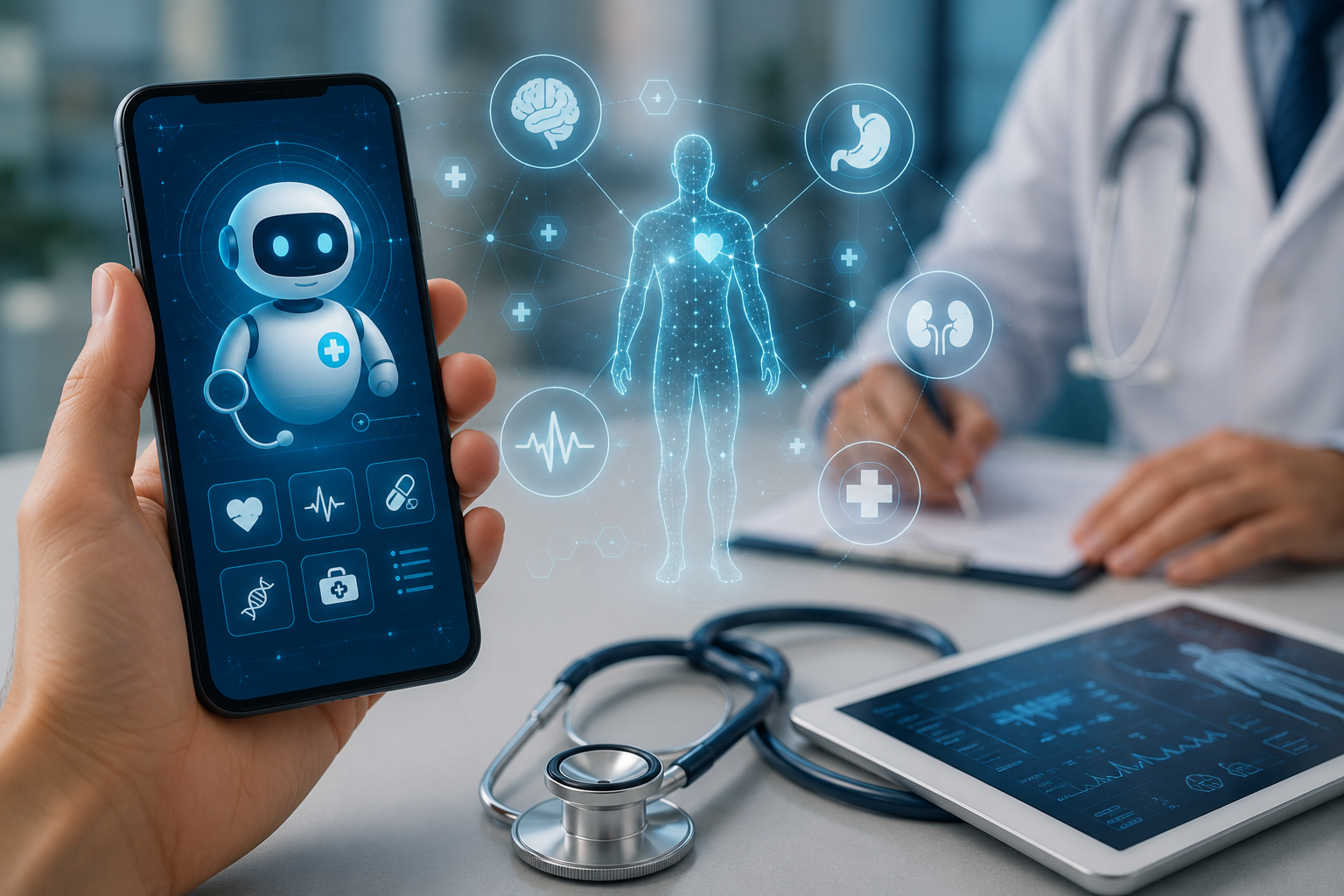
By Artificial Intelligence is rapidly transforming the healthcare industry, changing the way people access medical information, monitor their health, and even receive early guidance on symptoms. From AI-powered chatbots and symptom checkers to wearable health apps and virtual assistants, technology is increasingly becoming a “doctor in your pocket.” These tools promise faster access to health advice, convenience, and personalized care. However, as AI becomes more involved in medical decision-making, many people are also asking an important question: is AI in healthcare truly helpful, or does it come with serious risks?
AI in healthcare refers to the use of machine learning, data analysis, natural language processing, and predictive systems to support doctors, hospitals, and patients. Today, AI tools can analyze symptoms, suggest possible causes of illness, remind patients to take medication, track heart rate and sleep, and even help doctors detect diseases from scans and medical reports. In many ways, AI is making healthcare more accessible and efficient than ever before.
One of the biggest benefits of AI in healthcare is convenience. Instead of waiting hours or days for a doctor’s appointment, people can use AI health apps to get immediate answers to basic health questions. Symptom checker apps, for example, allow users to enter symptoms and receive a list of possible conditions or next steps. This can be especially useful for minor issues, first-level guidance, and health awareness. AI tools are also available 24/7, which makes them valuable for people who need quick support outside normal hospital hours.
Another major advantage is early detection and faster diagnosis. AI systems can process huge amounts of medical data much faster than humans. In hospitals and diagnostic centers, AI is already being used to help detect diseases such as cancer, diabetic retinopathy, heart conditions, and lung abnormalities through scans and imaging. By identifying patterns that may be missed by the human eye, AI can support doctors in making quicker and more accurate decisions. This has the potential to improve treatment outcomes and reduce delays in diagnosis.
AI is also helping create more personalized healthcare. Many fitness and health apps now use AI to track sleep, physical activity, stress levels, calories, and heart rate. Based on this information, they provide personalized reminders, recommendations, and alerts. For example, a wearable device may detect an unusual heart rhythm or poor sleep pattern and encourage the user to seek medical advice. This shift from reactive care to preventive care is one of the most promising aspects of AI in modern medicine.
However, despite these benefits, AI in healthcare is not without risks. The first major concern is accuracy. AI tools are only as good as the data they are trained on. If the system has incomplete, biased, or poor-quality data, it may produce misleading advice or incorrect results. A symptom checker app may suggest something minor when the issue is actually serious, or it may cause unnecessary panic by showing dangerous possibilities without proper context. This is why AI should never be treated as a complete replacement for a qualified doctor.
Another serious concern is overdependence on self-diagnosis. Because AI tools are easy to access, many people may rely on them instead of seeking professional medical care. This can delay proper diagnosis and treatment, especially in emergencies or complex health conditions. A chatbot or app may provide general advice, but it cannot fully understand a patient’s medical history, body language, emotional state, or hidden symptoms the way a trained doctor can. Human judgment remains essential in healthcare, especially when lives are at stake.
Privacy and data security are also major issues. Health information is highly sensitive, and AI healthcare apps often collect large amounts of personal data, including medical history, heart rate, sleep patterns, menstrual cycles, medications, and more. If this data is not stored securely, it can be misused, leaked, or sold to third parties. As digital health tools become more common, stronger regulations and transparent privacy policies are necessary to protect patients.
Another challenge is the digital divide. While AI healthcare tools may benefit urban, tech-savvy users, not everyone has access to smartphones, stable internet, or digital literacy. In countries like India, where healthcare access is already unequal in some regions, overreliance on digital tools could unintentionally widen the gap between those who can access modern healthcare and those who cannot.
So, is “doctor in your pocket” helpful or risky? The answer is both. AI in healthcare is undoubtedly helpful when used as a support tool. It can improve access to information, speed up diagnosis, support preventive care, and reduce the workload on healthcare systems. But it also becomes risky when people use it as a replacement for medical professionals, trust it blindly, or ignore the privacy concerns that come with digital health platforms.
The future of healthcare is not about AI replacing doctors. It is about AI working alongside doctors to make healthcare smarter, faster, and more patient-friendly. The safest and most effective approach is to treat AI as an assistant, not as a final decision-maker. Technology can guide, inform, and support, but when it comes to diagnosis, treatment, and emergencies, human medical expertise still matters the most.
Follow Us On Instagram