


 By
By As the monsoon continues across India, seasonal illnesses are becoming a major health concern. Fever, headache, body pain, weakness, sore throat and vomiting are common during this period, but not every fever is simply a routine viral infection. Health experts are urging people to pay attention to symptoms because dengue can initially resemble viral fever.
Why Dengue Risk Increases During the Monsoon
Dengue is transmitted by infected Aedes mosquitoes. During the rainy season, stagnant water can collect in containers, tyres, coolers, flowerpots, discarded plastic items and other areas around homes. These conditions can provide breeding sites for mosquitoes.
Health authorities in several parts of India have increased surveillance and prevention activities because of the seasonal risk. Jharkhand, for example, issued a dengue and chikungunya alert earlier this monsoon and advised residents to eliminate stagnant water and seek medical attention if fever develops.
Dengue and Viral Fever Can Look Similar
Both dengue and viral infections can cause fever, headache, tiredness and body aches. This overlap can make it difficult for people to identify the cause without medical assessment.
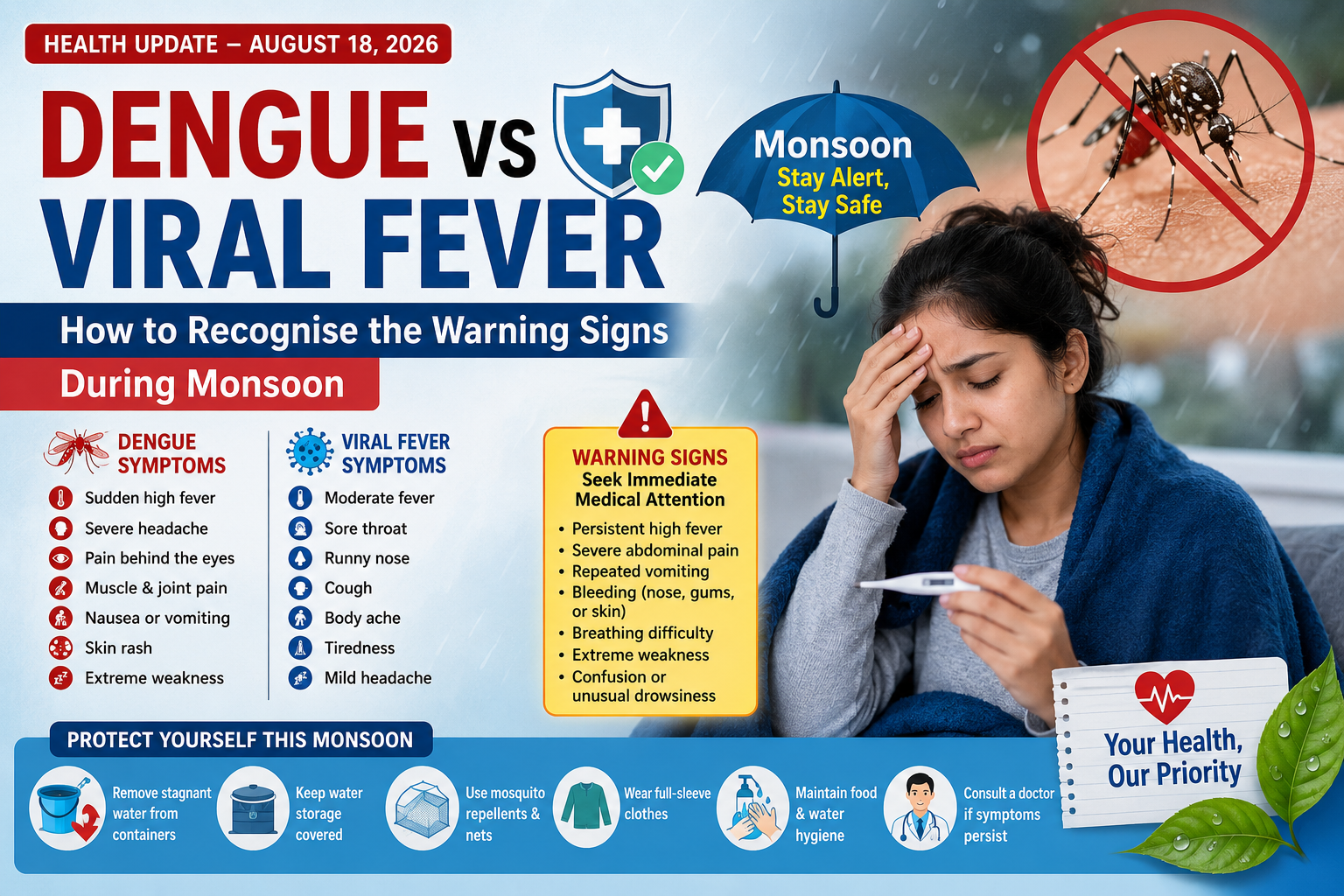
Possible dengue symptoms may include:
- Sudden high fever
- Severe headache
- Pain behind the eyes
- Significant muscle and joint pain
- Nausea or vomiting
- Skin rash
- Unusual weakness
However, symptoms can vary from person to person. Having a fever does not automatically mean that someone has dengue.
Warning Signs That Should Not Be Ignored
People should seek medical attention if fever is persistent, unusually severe, or accompanied by symptoms such as repeated vomiting, severe abdominal pain, bleeding, breathing difficulty, extreme weakness, confusion or unusual drowsiness.
It is particularly important not to rely on online symptom comparisons or self-prescribed medicines to determine whether a person has dengue. A healthcare professional can decide whether testing or further evaluation is necessary.
How to Reduce Dengue Risk at Home
Prevention remains one of the most effective ways to reduce mosquito-borne disease transmission.
Check your home and surroundings regularly for stagnant water. Empty water from coolers, buckets, flowerpots, tyres and other containers. Keep water storage containers properly covered and clean them regularly.
Mosquito protection is also important. Use appropriate mosquito repellents, wear clothing that provides good coverage and take steps to prevent mosquitoes from entering living spaces.
Community-level prevention is equally important. Removing breeding sites from neighbourhoods can help reduce mosquito populations and protect vulnerable residents.
Monsoon Health Requires More Than Mosquito Protection
Rainy weather can also increase the risk of water contamination and infections. Leptospirosis, for example, can become more common after flooding because people may come into contact with contaminated water.
Safe drinking water, proper food hygiene and regular handwashing are therefore important during the monsoon. Avoid consuming food or drinking water from questionable sources, particularly after flooding or waterlogging.
What Should You Do If You Develop a Fever?
Do not automatically assume that a fever is just a seasonal viral infection. Monitor your symptoms and consult a healthcare professional if the fever is persistent, severe or accompanied by warning signs.
Avoid taking medicines without appropriate medical advice, especially when the cause of fever has not been established.
The goal is not to create unnecessary fear about dengue. Instead, early recognition, appropriate medical evaluation and mosquito-control measures can help reduce complications and transmission.
Final Word
Monsoon brings relief from the summer heat, but it can also create conditions favourable for mosquitoes and several infectious diseases. With dengue and other monsoon illnesses remaining a concern, prevention and timely medical attention are essential.
Keep your surroundings free of stagnant water, protect yourself from mosquito bites, maintain food and water hygiene, and do not ignore persistent or unusual fever.
Stay alert, stay protected and make monsoon health a priority.
This article is for general awareness and is not a substitute for professional medical advice.
Follow Us On Instagram