

 By
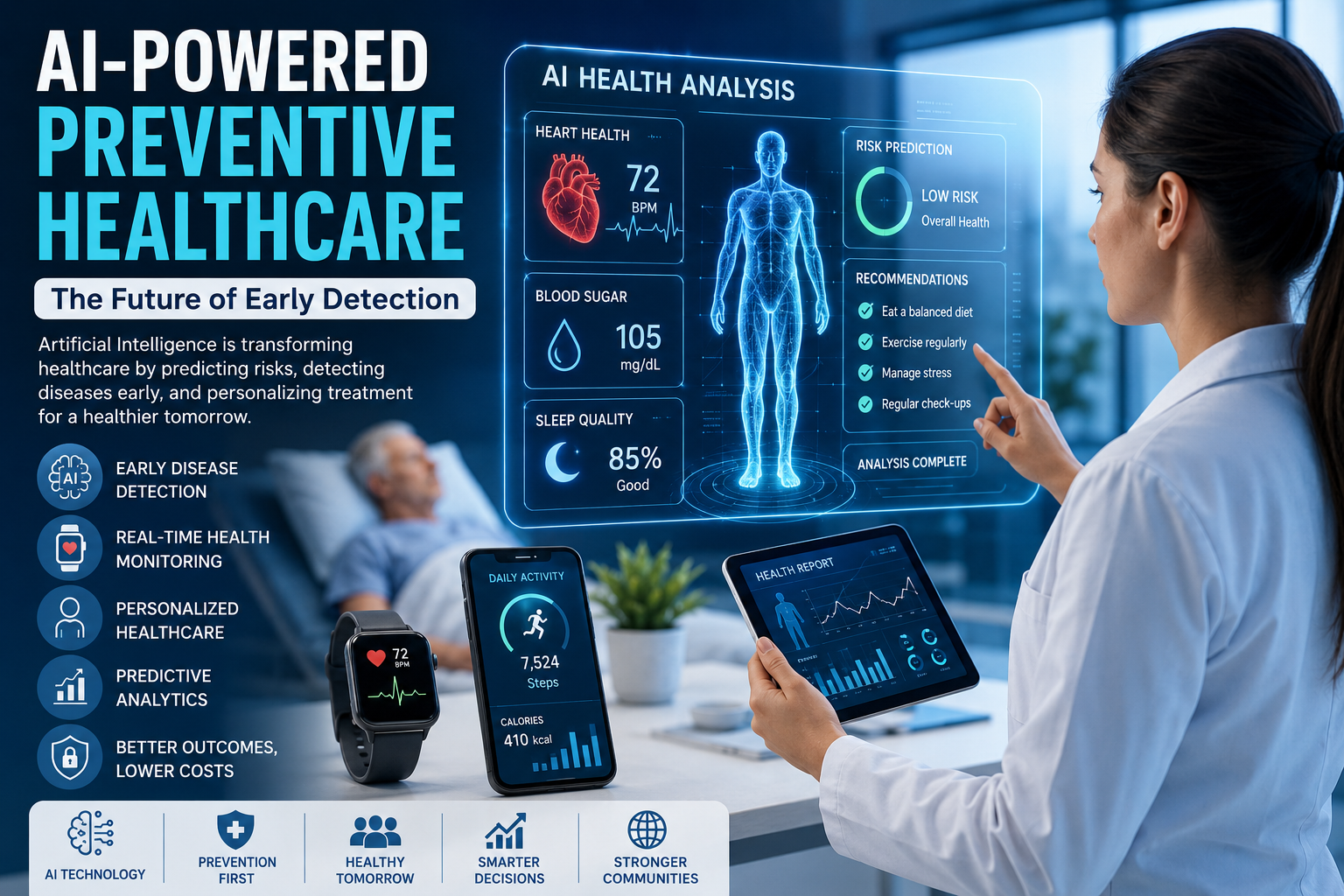
By Artificial Intelligence (AI) is redefining the future of healthcare, making preventive care more efficient, accurate, and accessible than ever before. In 2026, AI-powered preventive healthcare has emerged as one of the biggest global health trends, helping doctors detect diseases earlier, improve patient outcomes, and reduce healthcare costs. Instead of waiting for symptoms to become severe, healthcare providers are now using AI to identify potential health risks before they develop into serious medical conditions.
Preventive healthcare focuses on maintaining good health and preventing diseases before they occur. AI has become a powerful tool in achieving this goal by analyzing massive amounts of medical data in just seconds. From electronic health records and laboratory reports to medical imaging and wearable device data, AI can identify patterns that may not be easily recognized by humans. This allows healthcare professionals to make faster and more accurate decisions, ultimately saving lives.
One of the most remarkable applications of AI is in early disease detection. AI-powered systems can examine X-rays, CT scans, MRIs, and mammograms with exceptional precision. These advanced technologies assist doctors in identifying diseases such as breast cancer, lung cancer, heart disease, and neurological disorders at much earlier stages. Early diagnosis is often the key to successful treatment because it enables patients to receive medical care before the disease progresses. As a result, recovery rates improve, treatment costs decrease, and patients experience better long-term health outcomes.
Wearable health technology is another major contributor to the growth of AI-powered preventive healthcare. Millions of people now use smartwatches and fitness trackers to monitor their daily health. These devices continuously record important health indicators such as heart rate, blood oxygen levels, sleep quality, physical activity, stress levels, and calorie expenditure. AI processes this real-time information to identify abnormal patterns that could indicate developing health issues. If irregular heart rhythms or unusual health changes are detected, users receive alerts encouraging them to seek medical attention before the condition becomes serious.
Personalized healthcare is becoming increasingly important as AI continues to evolve. Every individual has unique medical needs influenced by age, genetics, lifestyle, and family medical history. AI can combine these factors to generate customized healthcare recommendations tailored to each person. Patients receive personalized diet plans, exercise routines, medication reminders, preventive screening schedules, and lifestyle suggestions that support better overall health. This individualized approach helps improve patient engagement while promoting healthier daily habits.
Artificial intelligence is also transforming the management of chronic diseases such as diabetes, hypertension, and cardiovascular disorders. Patients living with chronic illnesses require regular monitoring and continuous medical supervision. AI-powered monitoring systems allow healthcare providers to track patients remotely while identifying warning signs before emergencies occur. Predictive analytics can forecast potential complications, allowing doctors to adjust treatment plans earlier. This proactive approach reduces hospital admissions, improves disease management, and enhances patients’ quality of life.
Mental health has become another important focus area for AI innovation. Digital mental health platforms powered by artificial intelligence are helping identify early signs of anxiety, depression, stress, and emotional burnout. By analyzing behavioral patterns, sleep quality, and user interactions, AI systems can recommend stress management techniques and encourage individuals to seek professional medical support when necessary. Although AI cannot replace qualified mental health professionals, it serves as an effective early screening tool that supports timely intervention.
Hospitals and healthcare organizations are increasingly adopting AI to improve operational efficiency. Artificial intelligence helps hospitals predict patient admissions, optimize staff scheduling, manage medical inventories, and reduce waiting times. Administrative tasks that previously consumed valuable time are now automated, allowing doctors and nurses to focus more on patient care. Improved efficiency not only enhances healthcare delivery but also creates a better experience for patients by minimizing delays and improving access to medical services.
Public health authorities are also using AI to strengthen disease surveillance and outbreak monitoring. By analyzing healthcare records, travel data, environmental conditions, and population trends, AI can detect unusual disease patterns that may indicate emerging outbreaks. Early identification enables governments and healthcare agencies to respond more quickly, reducing the spread of infectious diseases and improving public health preparedness. This capability has become increasingly valuable as global health systems work to prevent future pandemics and other large-scale health emergencies.
Despite its many advantages, the widespread use of AI in healthcare also presents important challenges. Patient privacy and data security remain major concerns because AI systems rely on large volumes of sensitive medical information. Healthcare organizations must implement strong cybersecurity measures and comply with strict privacy regulations to protect patient data. Ethical considerations, transparency, and fairness in AI decision-making are equally important to ensure that technology is used responsibly. Healthcare experts emphasize that AI should support medical professionals rather than replace them, with final clinical decisions always remaining in the hands of qualified doctors.
Looking ahead, AI-powered preventive healthcare will continue to shape the future of medicine. Advances in machine learning, robotics, wearable technology, and digital health platforms are expected to make healthcare even more personalized and proactive. Future AI systems may predict diseases years before symptoms appear, allowing individuals to take preventive action much earlier. Governments, healthcare providers, and technology companies are investing heavily in AI research to improve accessibility, affordability, and quality of healthcare worldwide.
In conclusion, AI-powered preventive healthcare represents one of the most significant healthcare innovations of 2026. By enabling early disease detection, supporting personalized treatment, improving chronic disease management, strengthening public health surveillance, and enhancing hospital efficiency, artificial intelligence is transforming modern medicine. As technology continues to advance, AI will play an even greater role in helping people live healthier lives while making healthcare systems more efficient, intelligent, and patient-centered. The future of healthcare is no longer just about treating diseases—it is about preventing them before they begin, and AI is leading this remarkable transformation.
Follow Us On Instagram