 By
By Critical Infrastructure Security in 2026: Protecting Essential Services from Modern Cyber Threats
Critical infrastructure forms the backbone of every modern society. Electricity grids, water treatment facilities, transportation systems, healthcare networks, and communication services are essential for daily life and economic stability. As these systems become increasingly connected through digital technologies and the Industrial Internet of Things (IIoT), they also become more vulnerable to cyberattacks. In 2026, protecting critical infrastructure has become a top priority for governments, utility providers, healthcare organizations, and private industries worldwide.
Critical Infrastructure Security focuses on safeguarding the systems, networks, and technologies that provide essential public services. A successful cyberattack on these infrastructures can disrupt daily life, cause financial losses, threaten public safety, and even impact national security. As cybercriminals continue to target operational technology (OT) environments, organizations must implement advanced security strategies to maintain resilience and ensure uninterrupted operations.
Why Critical Infrastructure Security Matters
Essential services operate around the clock and cannot afford prolonged downtime. Power outages, water supply disruptions, transportation failures, or compromised hospital systems can have severe consequences for millions of people. Unlike traditional IT systems, many operational technologies were originally designed for reliability rather than cybersecurity, making them attractive targets for attackers.
Recent cyber incidents have demonstrated that ransomware, supply chain attacks, and nation-state cyber operations increasingly focus on critical infrastructure. These evolving threats highlight the importance of building strong cyber defenses while ensuring operational continuity.
Securing SCADA Systems
Supervisory Control and Data Acquisition (SCADA) systems are widely used to monitor and control industrial operations such as power generation, oil and gas pipelines, water treatment plants, and manufacturing facilities. Because SCADA systems directly control physical equipment, securing them is essential to prevent operational disruptions.
Organizations should isolate SCADA networks from public internet access, implement secure remote access methods, encrypt communication channels, and continuously monitor system activity. Regular software updates and vulnerability assessments help reduce security risks while maintaining system reliability.
Modern SCADA environments also benefit from network segmentation, ensuring that a compromise in one area does not spread across the entire operational network.
Industrial Control System (ICS) Protection
Industrial Control Systems (ICS) manage critical industrial processes across various sectors. These systems include Programmable Logic Controllers (PLCs), Distributed Control Systems (DCS), and Human Machine Interfaces (HMIs), all of which play vital roles in maintaining operational efficiency.
Protecting ICS environments requires a specialized cybersecurity approach because traditional IT security solutions may interfere with industrial operations. Organizations should implement:
- Strict access control for engineers and operators
- Multi-Factor Authentication (MFA) for administrative accounts
- Continuous monitoring of OT networks
- Secure firmware and software updates
- Asset inventory and vulnerability management
- Network segmentation between IT and OT environments
By securing Industrial Control Systems, organizations reduce the likelihood of operational disruptions caused by cyberattacks or insider threats.
Backup and Disaster Recovery Planning
No security strategy is complete without a robust backup and disaster recovery plan. Even with advanced cybersecurity controls, organizations must prepare for worst-case scenarios such as ransomware attacks, hardware failures, or natural disasters.
Modern backup strategies follow the “3-2-1” rule: maintain three copies of critical data, store them on two different media types, and keep one copy offsite or offline. Immutable backups, which cannot be altered or deleted by attackers, have become increasingly important in defending against ransomware.
Disaster recovery plans should clearly define recovery objectives, communication procedures, system restoration priorities, and incident response responsibilities. Regular testing ensures that organizations can quickly restore essential services during emergencies.
AI and Real-Time Threat Monitoring
Artificial Intelligence is transforming critical infrastructure security by enabling faster threat detection and automated incident response. AI-powered security platforms continuously analyze operational data, identify unusual behavior, and detect potential cyber threats before they disrupt services.
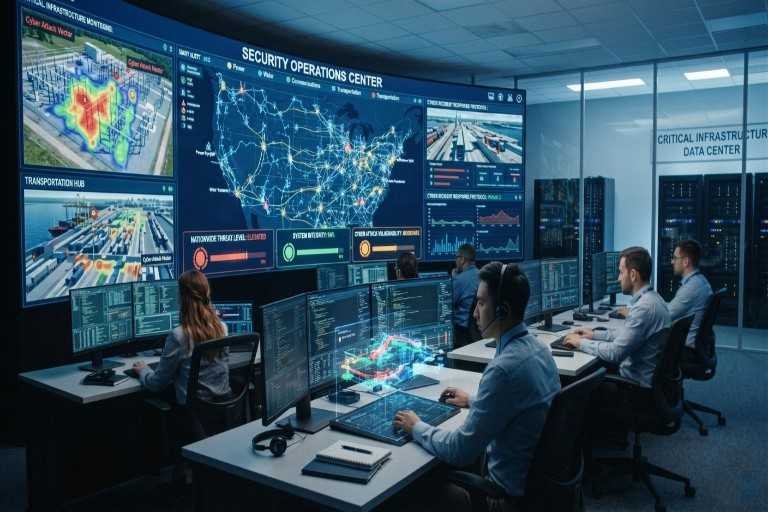
Security Operations Centers (SOCs) increasingly rely on machine learning to correlate millions of events across IT and OT environments. This allows security teams to identify sophisticated attacks while reducing false alarms and improving response times.
Building Cyber Resilience for the Future
The future of critical infrastructure security extends beyond preventing cyberattacks. Organizations must build cyber resilience—the ability to prepare for, respond to, recover from, and adapt to evolving threats.
This includes conducting regular risk assessments, training employees on cybersecurity awareness, adopting Zero Trust principles, and complying with industry regulations and security standards. Collaboration between governments, infrastructure operators, cybersecurity vendors, and emergency response teams is also essential for protecting national infrastructure.