 By
By Googlebook AI Laptops: How Google Is Changing the Future of Personal Computing
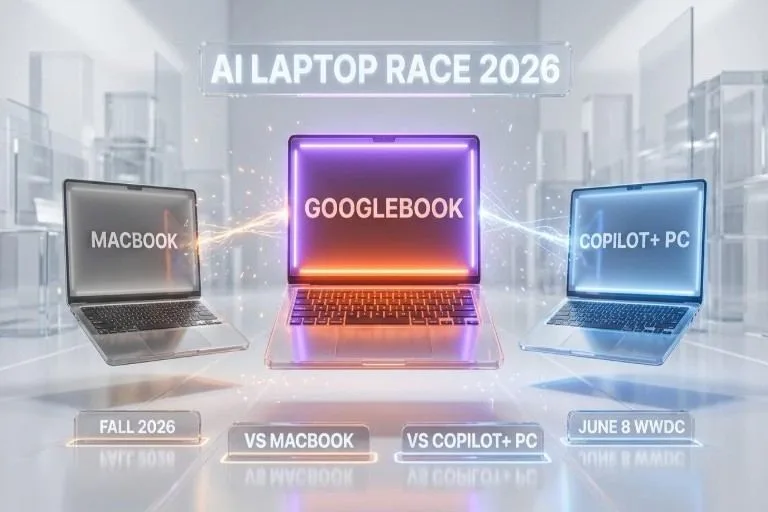
The computer industry is entering another major transition, and one of the biggest stories this week is Google’s move into premium AI laptops. On September 21, 2026, Google opened pre-orders for its new Googlebook laptops, marking a significant expansion of its hardware strategy. The new computers are designed around Google’s Gemini AI and closer integration between Android phones and desktop computing.
Unlike traditional Chromebooks that have primarily focused on affordability and education, Googlebook is positioned as a higher-end computing platform. The first models are being produced by Acer, Asus, Dell, HP and Lenovo, with prices starting at $899. This places Googlebook directly into the premium laptop market.
AI Becomes the Center of the Computer
The biggest change in the new Googlebook concept is the role of artificial intelligence. Rather than treating AI as an optional application, Google is putting Gemini at the center of the computing experience.
The laptops are designed to provide AI assistance for tasks such as writing, organizing information and interacting with content on the screen. Google is also promoting features that allow users to move more easily between their Android smartphones and computers. This approach reflects a broader industry trend in which computers are becoming increasingly capable of understanding context and helping users complete tasks rather than simply running traditional applications.
Android and Laptop Integration
Another important part of Googlebook is its connection with Android. Users can continue activities between their phone and laptop, stream compatible mobile applications and access information across devices.
This cross-device approach is becoming increasingly important in the computer market. Instead of viewing a laptop, smartphone and tablet as completely separate products, technology companies are building ecosystems in which information and applications can move between devices.
Googlebook is therefore competing not only through hardware specifications but also through software integration. Its strategy demonstrates how future computers may become more closely connected to the other devices people use every day.
Performance and Battery Life
The first Googlebook models combine processors from Intel and Qualcomm with premium laptop designs. Google says the computers can deliver up to 14 hours of battery life, depending on the model and configuration.
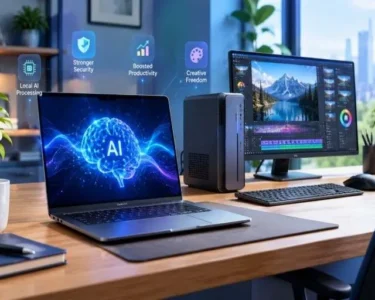
Battery efficiency has become particularly important as AI workloads become more common. Modern laptops increasingly include dedicated processing capabilities for artificial intelligence, allowing certain tasks to be performed locally rather than relying completely on cloud servers.
Qualcomm is also pushing this direction with its Snapdragon X2 platform. At Snapdragon Summit 2026, the company highlighted “agentic” AI PCs designed to let AI agents handle more complex workflows locally. Qualcomm says Snapdragon X2 systems are expanding across Windows, Linux and Googlebook devices.
Microsoft and the Wider AI PC Competition
Google is entering a market where Microsoft and PC manufacturers are already investing heavily in AI computers. Microsoft recently introduced new Surface Pro and Surface Laptop models powered by Snapdragon X2 Plus processors. Microsoft says these devices offer improved battery efficiency, faster graphics and significantly faster on-device AI performance compared with the previous generation.
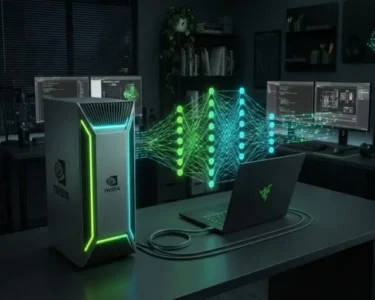
Microsoft has also announced a Windows and Surface event for October 7 focused on local AI and the next generation of AI PCs. Meanwhile, NVIDIA and its partners are preparing RTX Spark Windows PCs for October.
This means the second half of 2026 is becoming an important period for AI-focused computing, with major technology companies approaching the category from different directions.
What the Future of Computers Could Look Like
The Googlebook launch highlights a broader transformation in personal computing. Future laptops are likely to focus less on simply offering faster processors and more on combining AI acceleration, battery efficiency, cloud services and cross-device connectivity.
Windows is also continuing to update AI-related components. Microsoft’s September 22 Windows 11 26H1 preview update includes updated AI components for supported Copilot+ PCs, showing that AI functionality is becoming increasingly integrated into the operating system itself.
For consumers, the growing competition could mean more choices in how computers handle everyday work, creativity, entertainment and AI-assisted tasks.
Googlebook is therefore more than another laptop launch. It represents Google’s attempt to redefine what a computer can be when AI and smartphone connectivity are built into the experience from the beginning. As Google, Microsoft, Qualcomm, NVIDIA and traditional PC manufacturers continue developing these systems, AI PCs are becoming one of the most important trends shaping the future of computers.