


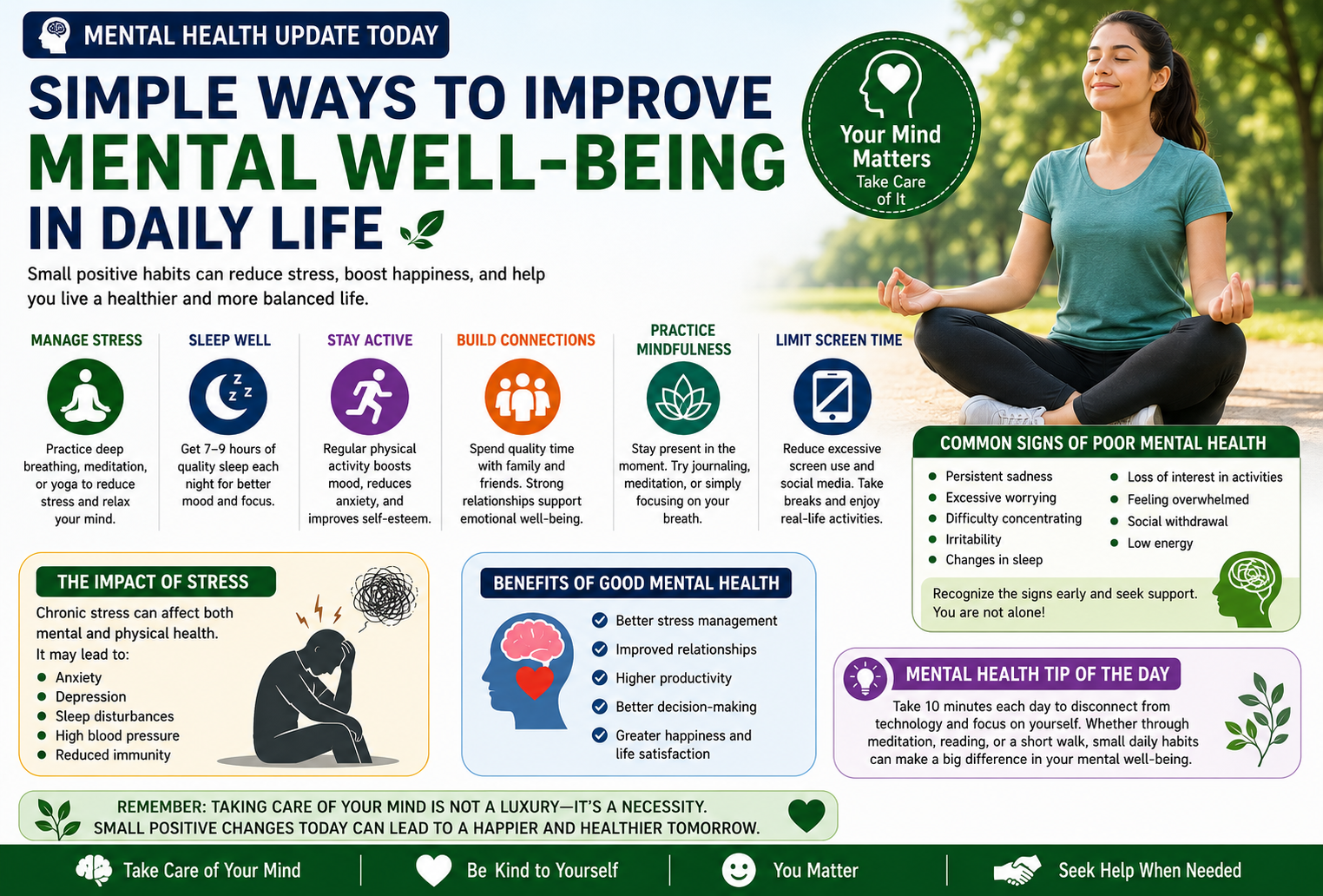
 By
By Mental health has become one of the most important health topics worldwide. While people often focus on physical fitness, experts emphasize that mental well-being is equally essential for living a healthy and balanced life.
In today’s fast-paced world, work pressure, financial concerns, social expectations, and excessive screen time can negatively affect mental health. Understanding the importance of mental wellness and adopting healthy habits can help individuals lead happier and more productive lives.
Why Mental Health Matters
A healthy mind helps people:
- Manage stress effectively
- Build positive relationships
- Improve focus and productivity
- Make better decisions
- Enjoy a higher quality of life
Ignoring mental health concerns can lead to emotional exhaustion, reduced productivity, and long-term health issues.
Common Signs of Poor Mental Health
Mental health challenges can affect anyone regardless of age or background. Recognizing early warning signs is important for seeking support and making positive changes.
Common signs include:
- Persistent sadness
- Excessive worrying
- Difficulty concentrating
- Irritability
- Changes in sleeping patterns
- Loss of interest in activities
- Feeling overwhelmed frequently
- Social withdrawal
Experiencing these symptoms occasionally is normal, but persistent issues may require professional support.
The Impact of Stress on Mental Health
Stress is a natural response to challenging situations. However, chronic stress can negatively impact both mental and physical health.
Long-term stress may contribute to:
- Anxiety
- Depression
- Sleep disturbances
- High blood pressure
- Reduced immunity
Managing stress effectively is crucial for maintaining emotional balance and overall well-being.
Importance of Quality Sleep
Sleep plays a vital role in mental health. During sleep, the brain processes information, regulates emotions, and restores energy levels.
Experts recommend:
- 7–9 hours of sleep per night
- Maintaining a consistent sleep schedule
- Avoiding screens before bedtime
- Creating a calm sleeping environment
Poor sleep can increase stress levels and negatively affect mood, concentration, and productivity.
Physical Activity Supports Mental Wellness
Regular exercise is one of the most effective ways to improve mental health naturally.
Physical activity helps release endorphins, often called “feel-good hormones,” which can boost mood and reduce stress.
Benefits include:
- Reduced anxiety
- Improved self-confidence
- Better sleep quality
- Enhanced focus and concentration
Even a 30-minute walk can have a positive impact on emotional well-being.
Building Strong Social Connections
Humans thrive on connection and support. Maintaining healthy relationships with family, friends, and colleagues can improve mental health significantly.
Social support helps individuals:
- Feel valued and understood
- Reduce feelings of loneliness
- Cope with difficult situations
- Build resilience during stressful periods
Spending quality time with loved ones can contribute greatly to emotional wellness.
Practicing Mindfulness and Relaxation
Mindfulness involves focusing on the present moment without judgment. It can help reduce stress, improve emotional regulation, and increase self-awareness.
Simple mindfulness practices include:
- Deep breathing exercises
- Meditation
- Yoga
- Journaling
- Spending time in nature
These activities promote relaxation and support mental clarity.
Limiting Screen Time
Excessive use of smartphones and social media can contribute to stress, anxiety, and sleep disturbances.
Experts recommend:
- Taking regular breaks from screens
- Limiting social media usage
- Engaging in offline hobbies
- Spending more time outdoors
Maintaining a healthy balance between technology and real-life activities is essential for mental well-being.
Mental Health Tip of the Day
Take 10 minutes each day to disconnect from technology and focus on yourself. Whether through meditation, reading, or a short walk, small daily habits can make a significant difference in mental wellness.
Conclusion
Mental health is just as important as physical health. By managing stress, prioritizing sleep, staying active, building meaningful relationships, and practicing mindfulness, individuals can improve their emotional well-being and lead healthier lives.
Remember, taking care of your mind is not a luxury—it’s a necessity. Small positive changes today can lead to a happier and healthier tomorrow.
Follow Us On Instagram