 By
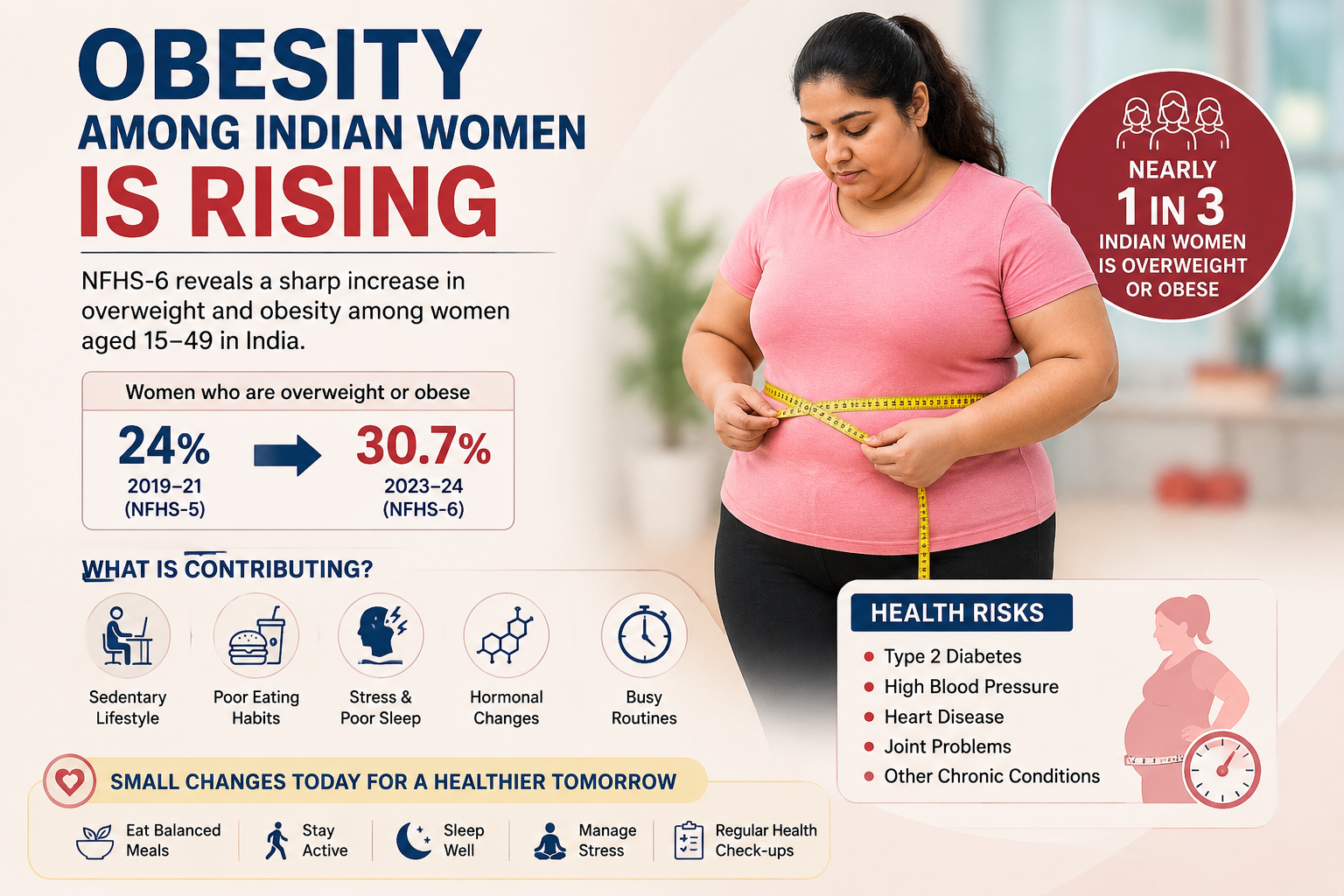
By India is facing a growing obesity challenge among women, with nearly one in three women aged 15–49 now classified as overweight or obese. According to the latest findings from the National Family Health Survey-6 (NFHS-6), the proportion increased from 24% in 2019–21 to 30.7% in 2023–24, highlighting a major shift in the country’s health profile.
The increase is raising concerns because excess weight can increase the risk of several long-term health problems, including diabetes, high blood pressure and cardiovascular disease.
What Does the Latest NFHS-6 Data Show?
The latest NFHS-6 data show a clear increase in overweight and obesity among Indian adults. Among women aged 15–49, 30.7% were found to be overweight or obese in 2023–24, compared with 24% in the previous survey.
The increase is part of a broader change in India’s health landscape, where lifestyle-related conditions are becoming increasingly important alongside traditional public-health concerns.
Why Is Obesity Increasing Among Indian Women?
There is no single reason behind the increase. Changes in daily routines, eating patterns, physical activity, stress and sleep can all contribute to unhealthy weight gain.
1. Less Physical Activity
Modern lifestyles often involve long periods of sitting, whether at work, while travelling or during leisure time. Reduced physical activity means fewer calories are burned throughout the day.
Regular walking, household physical activity, exercise and other forms of movement can help improve overall health and maintain a healthy weight.
2. Changing Eating Habits
Dietary patterns in India are changing. Greater availability of processed foods, sugary drinks, fried foods and high-calorie convenience meals can make it easier to consume more calories than the body needs.
A healthy diet does not necessarily require completely eliminating favourite foods. Instead, balanced portions, vegetables, fruits, whole grains and adequate protein can help support better nutrition.
3. Stress and Poor Sleep
Stress and insufficient sleep can also affect eating habits, energy levels and daily activity. Women frequently balance professional responsibilities, household responsibilities and family commitments, leaving less time for exercise, relaxation and self-care.
Recent reporting on the NFHS-6 obesity findings has also highlighted stress, inadequate sleep, prolonged sitting and hormonal factors as issues that may contribute to weight gain.
Why Is Obesity a Health Concern?
Being overweight or obese is more than a cosmetic issue. Excess body weight can increase the risk of several chronic conditions.
These include:
- Type 2 diabetes
- High blood pressure
- Heart disease
- Abnormal cholesterol levels
- Joint problems
- Sleep-related breathing problems
- Certain other chronic diseases
The rise in obesity alongside increasing blood-sugar levels makes the latest findings particularly important for India’s long-term public health.
Small Lifestyle Changes Can Make a Difference
The solution does not have to involve extreme diets or rapid weight-loss programmes. Sustainable lifestyle changes can be more practical for long-term health.
Women can consider:
- Including more vegetables and whole foods in daily meals
- Limiting sugary drinks and highly processed foods
- Controlling portion sizes
- Walking or exercising regularly
- Avoiding prolonged periods of sitting
- Getting adequate sleep
- Managing stress through healthy activities
- Monitoring weight, waist circumference and blood sugar when appropriate
People who are concerned about their weight or have other health conditions should speak with a qualified healthcare professional before making major dietary or exercise changes.
A Growing Health Challenge for India
The rise from 24% to 30.7% among women aged 15–49 in just a few years shows how quickly India’s health priorities are changing.
India has traditionally faced significant challenges related to undernutrition, but the country is increasingly dealing with a combination of undernutrition and overnutrition. The latest findings demonstrate why prevention, nutrition education, physical activity and early health screening are becoming increasingly important.
Most importantly, discussions around women’s weight should focus on health rather than appearance. Weight management is not simply about eating less. Sleep, stress, physical activity, dietary quality, genetics, hormones and overall lifestyle can all influence health and body weight.
Conclusion
The latest NFHS-6 findings provide an important warning about the rising prevalence of overweight and obesity among Indian women. With 30.7% of women aged 15–49 now overweight or obese, nearly one in three women falls into this category.
The trend highlights the importance of making healthy habits part of everyday life. Regular movement, balanced nutrition, adequate sleep and timely health check-ups can help women protect their long-term health.
Follow Us On Instagram