


 By
By Wildlife conservation has become one of the most important global concerns in recent years. With rapid environmental changes, increasing urbanisation, and rising threats to biodiversity, experts are now emphasizing that protecting wildlife is not just a duty of governments but a shared responsibility across generations. The need to preserve natural ecosystems is more urgent than ever.
Across the world, forests, rivers, and wildlife habitats are facing serious challenges. Climate change, illegal hunting, pollution, and habitat destruction are putting many species at risk of extinction. As a result, conservation efforts are now being positioned as a long-term responsibility that must be carried forward by future generations.
Why Wildlife Conservation Matters Today
Wildlife plays a crucial role in maintaining ecological balance. Every species, whether big or small, contributes to the health of the environment. When even one species disappears, it can affect the entire ecosystem.
For example, forests depend on animals for seed dispersal, while predators help control population levels of other species. Without proper conservation, these natural systems can collapse, leading to serious environmental consequences.
Experts believe that protecting wildlife today will ensure a better and safer environment for future generations. This is why conservation is now seen as a continuous effort rather than a one-time action.
Growing Threats to Wildlife
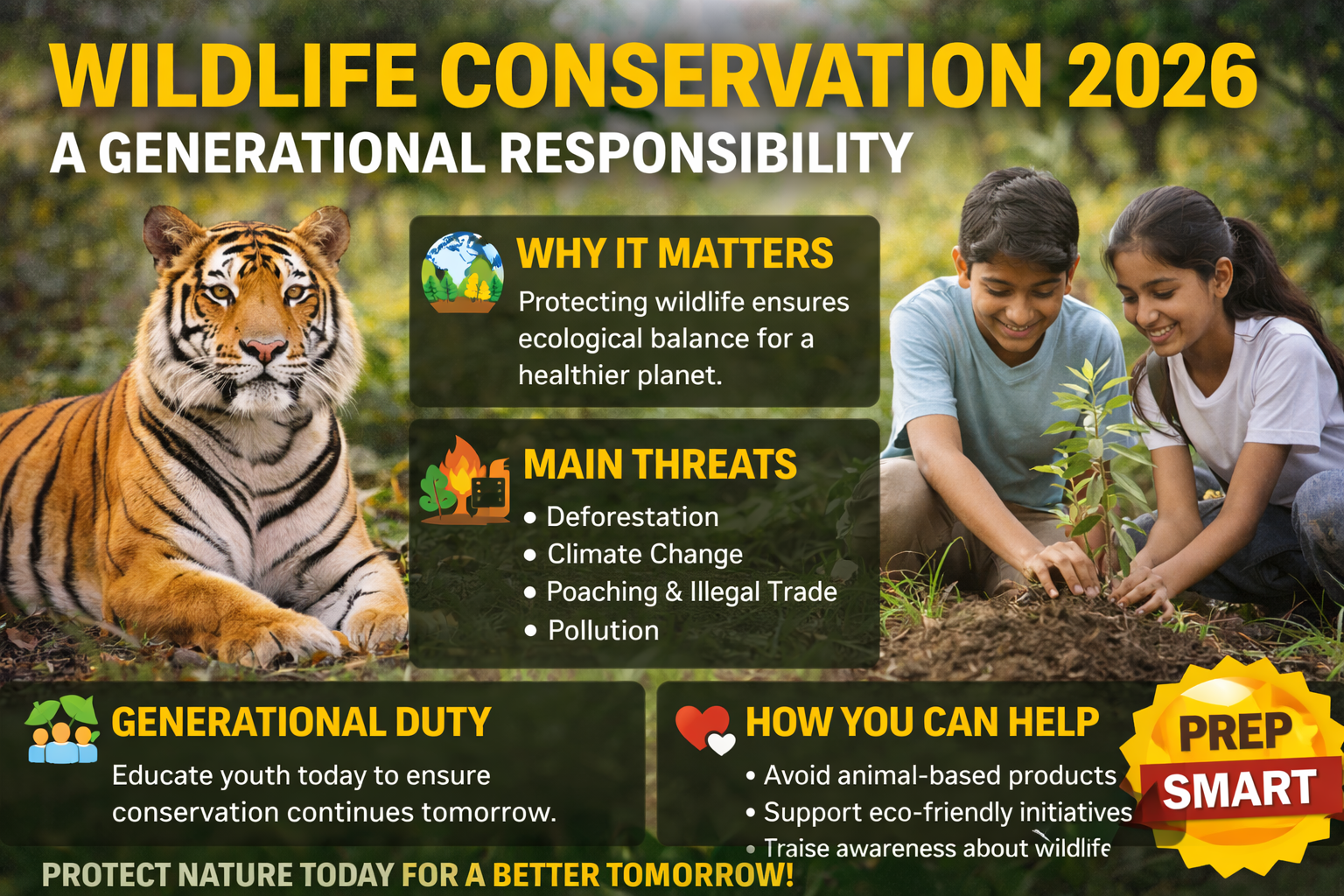
In recent years, the threats to wildlife have increased significantly. Some of the major challenges include:
- Deforestation due to urban expansion
- Climate change affecting habitats
- Illegal poaching and wildlife trade
- Pollution of water bodies and forests
These factors are causing a rapid decline in wildlife populations. Many species are now endangered, and immediate action is required to protect them.
Role of Younger Generations in Conservation
One of the key ideas gaining importance is involving young people in conservation efforts. Students and youth can play a major role in spreading awareness and adopting eco-friendly practices.
Schools and colleges are now including environmental education to help students understand the importance of wildlife. Simple actions like reducing plastic use, saving water, and supporting conservation programs can make a big difference.
By educating young minds, society can ensure that future generations continue the mission of protecting nature.
Government and Global Efforts
Governments and international organizations are also working towards wildlife protection. Various laws and conservation programs have been introduced to safeguard endangered species and natural habitats.
Protected areas such as national parks and wildlife sanctuaries are being developed to provide safe environments for animals. Awareness campaigns are also being conducted to educate people about the importance of biodiversity.
However, experts say that government efforts alone are not enough. Public participation is equally important for successful conservation.
How Individuals Can Contribute
Every individual can contribute to wildlife conservation in simple ways:
- Avoid using products made from endangered animals
- Support eco-friendly initiatives
- Spread awareness about wildlife protection
- Participate in environmental campaigns
Even small steps can create a big impact when followed consistently.
Building a Sustainable Future
Wildlife conservation is not just about protecting animals. It is about preserving the entire ecosystem for future generations. A healthy environment leads to better air, clean water, and a balanced climate.
By treating conservation as a shared responsibility, society can build a sustainable future where humans and wildlife coexist peacefully.
Final Words
Wildlife conservation is no longer an option—it is a necessity. As environmental challenges continue to grow, it is important for every individual to take responsibility. Protecting wildlife today will ensure that future generations can experience the beauty and benefits of nature.
The message is clear: conservation must become a habit, a responsibility, and a legacy that we pass on to the next generation.