 By
By Modern workplaces have transformed the way people work. While technology has improved productivity and communication, it has also created new health challenges for employees. One of the biggest concerns today is the increasing amount of time people spend sitting at their desks.
Health experts warn that prolonged sitting, workplace stress, poor posture, and lack of physical activity can negatively affect both physical and mental well-being. As more professionals spend eight to ten hours a day in front of computers, workplace health has become a major topic of discussion worldwide.
The Growing Problem of Sedentary Work
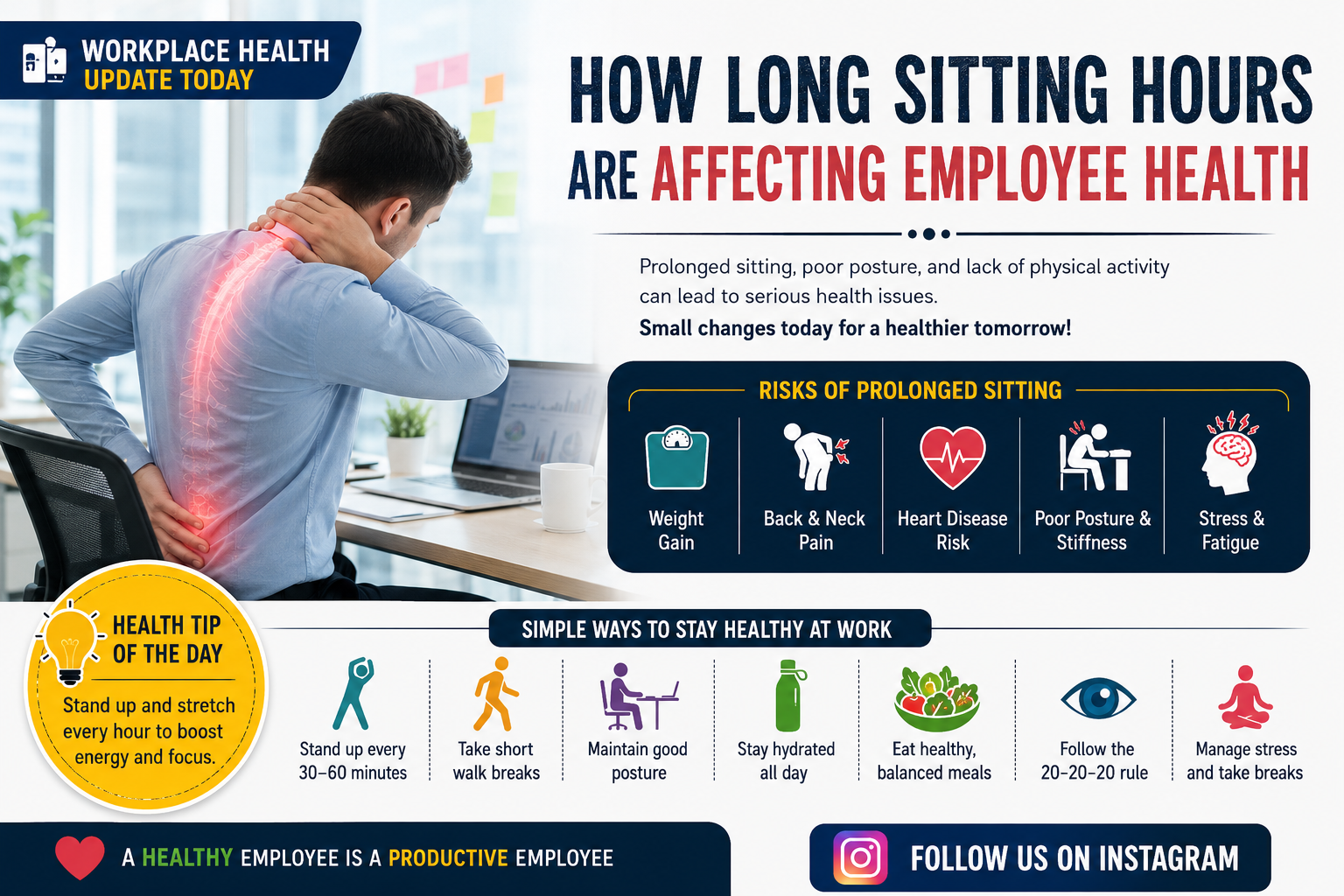
Many employees spend most of their working hours sitting at desks, attending meetings, or working on computers. While this may seem harmless, research shows that prolonged sitting can contribute to several health problems.
A sedentary lifestyle can lead to:
- Weight gain
- Poor blood circulation
- Back and neck pain
- Increased risk of heart disease
- Reduced flexibility and mobility
Experts recommend incorporating movement throughout the workday to counter these effects.
Poor Posture and Musculoskeletal Problems
Poor posture is one of the most common workplace health issues.
Employees often sit with rounded shoulders, bent necks, or improper desk setups, placing excessive strain on muscles and joints. Over time, this can result in:
- Chronic back pain
- Neck stiffness
- Shoulder discomfort
- Wrist pain
- Headaches
Creating an ergonomic workstation and maintaining proper posture can significantly reduce these risks.
Workplace Stress and Mental Health
Workplace stress is another major concern affecting employees across industries. Tight deadlines, heavy workloads, and work-life imbalance can impact mental well-being.
Common signs of workplace stress include:
- Fatigue
- Difficulty concentrating
- Irritability
- Anxiety
- Sleep disturbances
Managing stress is essential for maintaining productivity and overall health. Employers are increasingly encouraging wellness programs and mental health support initiatives to help employees cope effectively.
Importance of Regular Movement
Taking short breaks throughout the day can improve circulation and reduce physical strain.
Health professionals suggest:
- Standing up every 30–60 minutes
- Taking short walks during breaks
- Stretching regularly
- Using stairs instead of elevators when possible
Even a few minutes of movement can help improve energy levels and reduce discomfort associated with prolonged sitting.
Staying Hydrated at Work
Hydration is often overlooked in office environments.
Many employees become so focused on work that they forget to drink enough water. Dehydration can contribute to fatigue, headaches, and reduced concentration.
To stay hydrated:
- Keep a water bottle at your desk
- Drink water regularly throughout the day
- Limit sugary beverages
- Include water-rich fruits in your diet
Proper hydration supports both physical and mental performance.
Healthy Eating Habits in the Workplace
Busy schedules often lead employees to skip meals or rely on unhealthy snacks.
A balanced workplace diet should include:
- Fresh fruits
- Vegetables
- Whole grains
- Lean proteins
- Nuts and seeds
Healthy eating helps maintain energy levels, supports concentration, and reduces the risk of lifestyle-related diseases.
Eye Health and Screen Time
Employees who spend long hours in front of digital screens may experience eye strain.
Common symptoms include:
- Dry eyes
- Blurred vision
- Headaches
- Eye fatigue
The 20-20-20 rule is a simple way to protect eye health. Every 20 minutes, look at an object 20 feet away for at least 20 seconds.
Benefits of Workplace Wellness Programs
Organizations are increasingly investing in employee wellness programs to improve overall health and productivity.
Benefits include:
- Reduced stress
- Better employee engagement
- Increased productivity
- Lower absenteeism
- Improved job satisfaction
A healthy workforce contributes to a more positive and productive work environment.
Workplace Health Tip of the Day
Set a reminder to stand up and stretch every hour. Small movement breaks can improve circulation, reduce fatigue, and enhance focus throughout the day.
Conclusion
Workplace health is becoming more important than ever as employees spend increasing amounts of time sitting and working on digital devices. By improving posture, staying active, managing stress, eating healthy foods, and taking regular breaks, individuals can significantly improve their overall well-being.
Remember, small healthy habits practiced consistently can lead to major improvements in workplace health and long-term quality of life.
Follow Us On Instagram