


 By
By Published: August 6, 2026
Extreme heat is no longer just a seasonal inconvenience—it has become one of the most serious global public health concerns. As climate change continues to increase average temperatures worldwide, countries across Europe, Asia, and North America are experiencing record-breaking heatwaves. Health experts warn that these prolonged periods of high temperatures are leading to a rise in heat-related illnesses, hospital admissions, and even preventable deaths.
According to recent reports, several European countries have issued high-level heat alerts as temperatures approach or exceed 40°C (104°F). Governments are encouraging residents to stay indoors during peak afternoon hours, remain hydrated, and pay special attention to vulnerable populations such as older adults, children, and people with chronic illnesses.
Why Extreme Heat Is a Serious Health Risk
High temperatures place significant stress on the human body. When exposed to excessive heat for extended periods, the body’s natural cooling system struggles to regulate internal temperature. This can result in dehydration, heat exhaustion, or even life-threatening heatstroke.
Heat also affects cardiovascular health by forcing the heart to work harder to cool the body. Individuals with heart disease, kidney disorders, respiratory illnesses, or diabetes face a greater risk of complications during heatwaves. Healthcare professionals emphasize that rising temperatures should be treated as a public health emergency rather than simply uncomfortable weather.Follow Us On Instagram
Who Is Most Vulnerable?
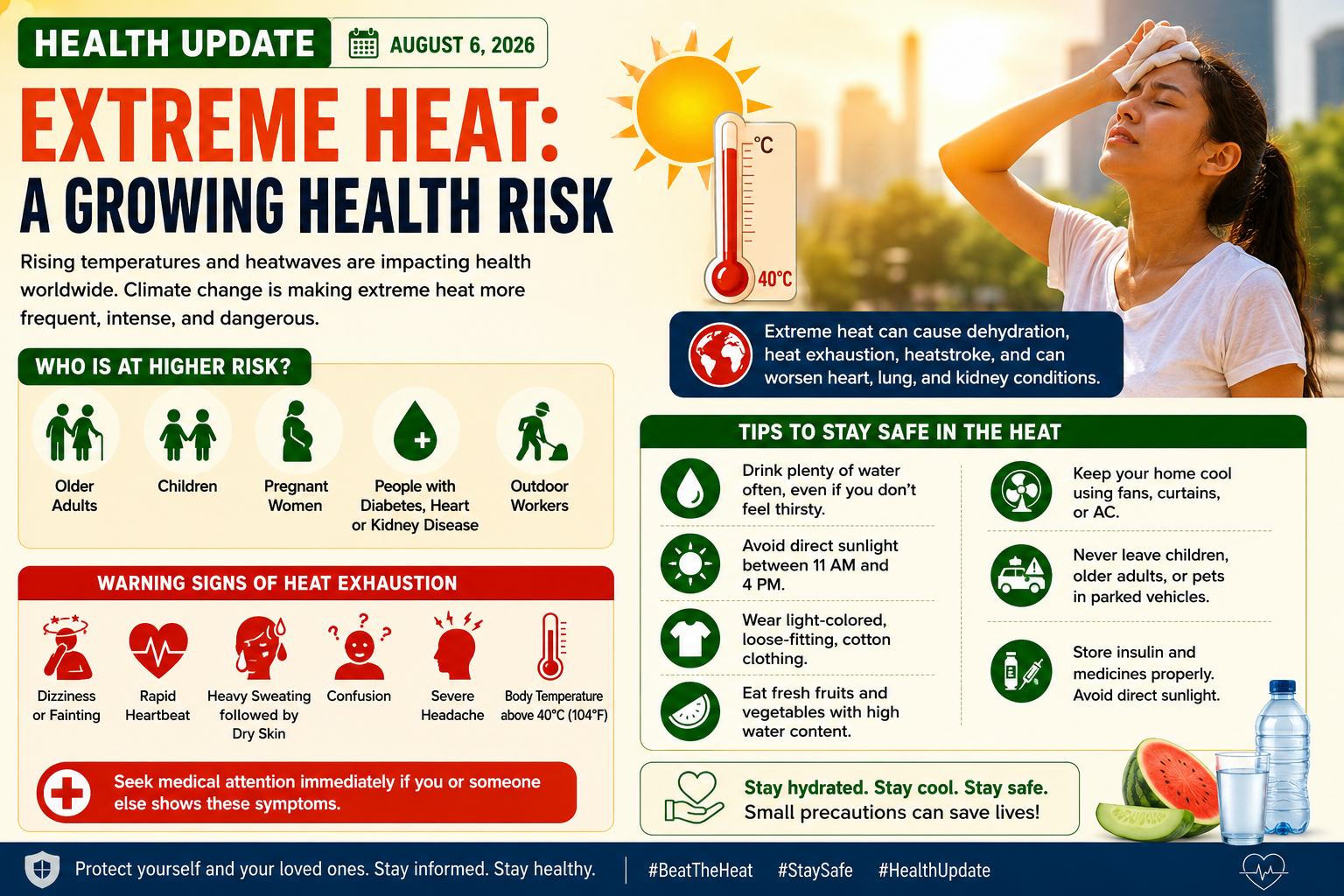
While everyone should take precautions during extreme heat, some groups are particularly at risk:
- Older adults over the age of 65
- Infants and young children
- Pregnant women
- People with diabetes
- Individuals with heart, kidney, or lung diseases
- Outdoor workers and athletes
- People without access to adequate cooling
For people living with diabetes, dehydration can lead to fluctuating blood sugar levels. Additionally, insulin and certain medications may lose effectiveness if stored in high temperatures. Medical experts recommend keeping insulin refrigerated or stored according to manufacturer guidelines and drinking water regularly throughout the day.
Common Symptoms of Heat-Related Illness
Recognizing the early warning signs can prevent serious complications. Symptoms include:
- Excessive sweating
- Muscle cramps
- Dizziness or lightheadedness
- Rapid heartbeat
- Headache
- Fatigue
- Nausea or vomiting
If someone develops confusion, loses consciousness, or has a body temperature above 40°C (104°F), immediate medical attention is required, as these are symptoms of heatstroke, a life-threatening condition.
Practical Ways to Stay Safe
Health authorities recommend several simple but effective measures to reduce the risk of heat-related illness:
- Drink plenty of water throughout the day, even before feeling thirsty.
- Avoid outdoor activities between 11:00 AM and 4:00 PM, when temperatures are highest.
- Wear lightweight, loose-fitting, and light-colored clothing.
- Use fans or air conditioning whenever possible.
- Eat water-rich fruits and vegetables such as watermelon, cucumber, oranges, muskmelon, and tomatoes.
- Take cool showers if feeling overheated.
- Never leave children, elderly people, or pets inside parked vehicles.
- Check on elderly neighbors or relatives who may need assistance during heatwaves.
Climate Change and Future Health Challenges
Scientists agree that climate change is increasing both the frequency and intensity of heatwaves worldwide. Rising global temperatures not only affect human health but also agriculture, food security, water availability, and air quality.
Air pollution often worsens during periods of extreme heat, increasing respiratory illnesses such as asthma and chronic obstructive pulmonary disease (COPD). Wildfires triggered by hot and dry conditions further contribute to poor air quality, making breathing difficult for millions of people.
Public health experts are encouraging governments to invest in heat action plans, early warning systems, urban green spaces, and climate-resilient healthcare infrastructure to protect communities from future extreme weather events.
Small Daily Habits Can Make a Big Difference
Protecting yourself from extreme heat does not always require expensive solutions. Staying hydrated, planning outdoor activities during cooler hours, eating nutritious foods, and recognizing early symptoms of heat-related illness can significantly reduce health risks.
Families should prepare for hotter summers by keeping emergency water supplies, monitoring weather alerts, and ensuring that elderly family members and young children remain cool and hydrated throughout the day.
Final Thoughts
Extreme heat is rapidly becoming one of the defining health challenges of our time. As temperatures continue to rise across the globe, awareness and prevention are our strongest tools for staying safe. By following simple health precautions and supporting climate-conscious initiatives, individuals and communities can reduce the impact of heatwaves and protect those most at risk.
Whether you’re working outdoors, managing a chronic illness, or simply enjoying the summer season, taking heat safety seriously can help prevent illness and save lives.
Follow Us On Instagram