 By
By Health Update | August 20, 2026
As the monsoon continues across several parts of India, health experts are urging people to remain alert to mosquito-borne diseases such as dengue, malaria and chikungunya. Recent health reports have highlighted increasing concern about mosquito-related infections during the rainy season, when stagnant water and humid conditions create favourable environments for mosquito breeding.
Why Does Dengue Increase During the Monsoon?
Dengue is caused by the dengue virus and is mainly transmitted by infected Aedes mosquitoes. According to India’s National Centre for Vector Borne Diseases Control (NCVBDC), Aedes mosquitoes can breed in relatively small quantities of stagnant water found in household and neighbourhood containers. These mosquitoes are also daytime biters and commonly live around domestic and residential areas.
During the rainy season, water can accumulate in flowerpot trays, buckets, discarded containers, tyres, coolers, tanks, construction materials and other places. Even small amounts of standing water can become potential breeding sites.
This makes mosquito prevention an important part of protecting families during the monsoon.
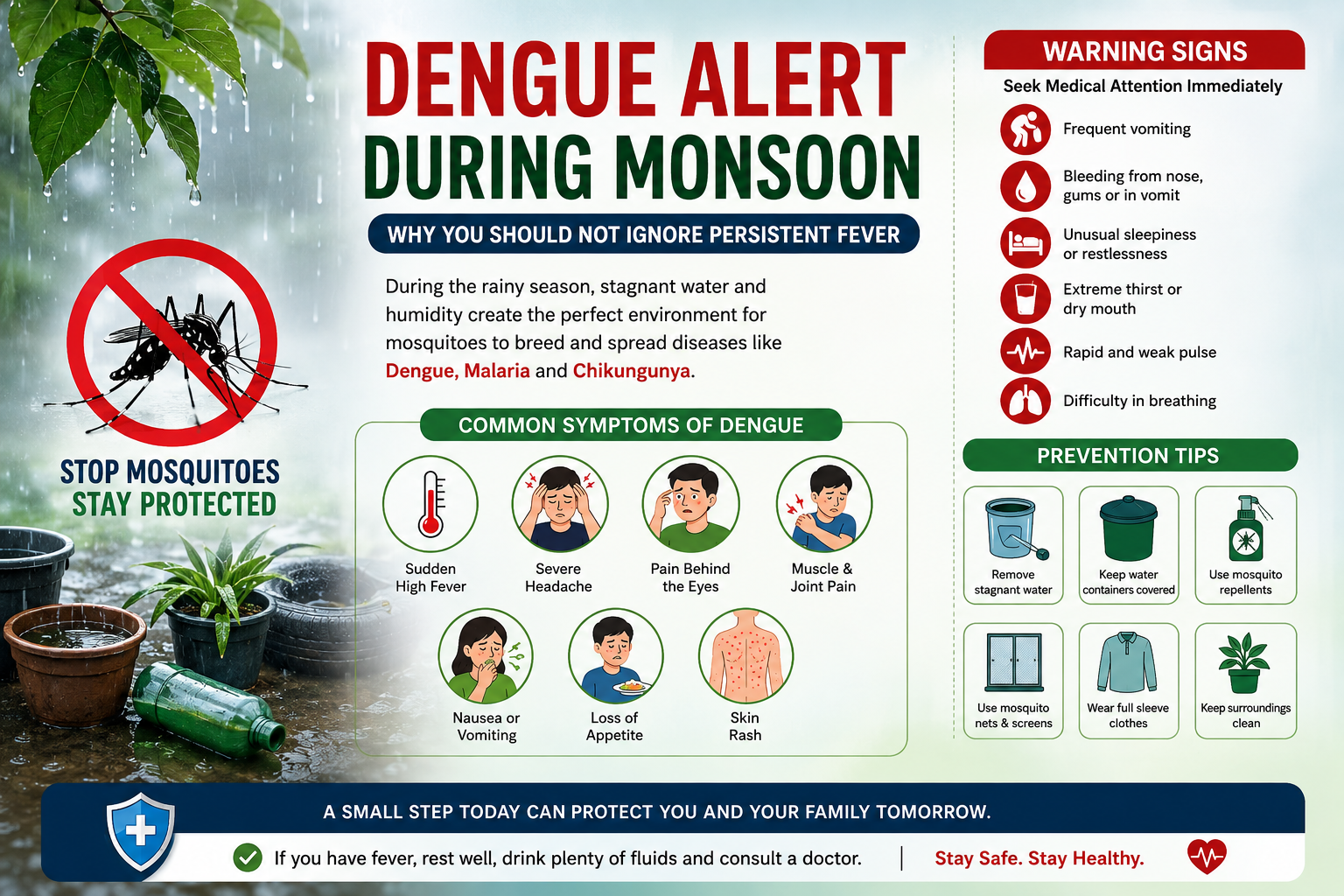
Common Symptoms of Dengue
Dengue can begin with symptoms that resemble other viral infections. The NCVBDC lists several common symptoms, including:
- Sudden high fever
- Severe headache
- Pain behind the eyes
- Muscle and joint pain
- Loss of appetite
- Nausea or vomiting
- Skin rash
Because these symptoms can overlap with other illnesses, people should avoid self-diagnosing based only on symptoms. If fever is persistent, severe or accompanied by concerning symptoms, medical evaluation is important.
Warning Signs That Need Urgent Attention
Severe dengue can become dangerous and requires prompt medical attention. Warning signs can include frequent vomiting, bleeding from the nose or gums, blood in vomit, unusual sleepiness or restlessness, extreme thirst or dry mouth, a rapid and weak pulse, and difficulty breathing.
People experiencing these symptoms should seek medical care immediately rather than waiting for the illness to improve on its own.
How Can You Protect Your Family?
The most effective approach is to reduce mosquito breeding around homes and communities.
Check your surroundings regularly for standing water. Empty and clean water containers, flowerpot trays, coolers and other items that can collect rainwater. Keep water-storage containers properly covered and dispose of discarded objects that may hold water.
Using mosquito repellents, wearing clothing that reduces exposed skin and using appropriate mosquito-control measures indoors can also help reduce exposure.
India’s health authorities have encouraged stronger vector-control activities, including source reduction and surveillance, particularly during periods of increased mosquito-borne disease risk. Public participation is an important part of these efforts.
Do Not Assume Every Fever Is “Just Viral”
One of the biggest dangers during the monsoon is delaying medical attention because a fever is assumed to be a routine seasonal infection.
Dengue, malaria, chikungunya and other infections can have overlapping symptoms, but their management may differ. Getting appropriate medical advice and testing when recommended can help identify the cause of illness and reduce the risk of complications.
The NCVBDC also advises people with suspected dengue to seek medical consultation and emphasizes adequate fluids and appropriate fever management under medical guidance.
Children and Older Adults Need Extra Attention
Parents and caregivers should pay close attention when children develop persistent fever, vomiting, unusual tiredness, poor fluid intake or other concerning symptoms. Older adults and people with existing health conditions may also require closer monitoring when they develop an acute illness.
Keeping the home environment clean and eliminating mosquito breeding locations should be treated as a regular weekly activity rather than something done only after mosquitoes become noticeable.
Prevention Starts at Home
Dengue prevention is not only the responsibility of hospitals or government agencies. Every household can contribute by preventing mosquitoes from breeding.
A few minutes spent checking balconies, rooftops, gardens, coolers, water containers and other areas around the house can help remove potential breeding sites.
As monsoon conditions continue, staying alert, maintaining good hygiene, preventing stagnant water and seeking timely medical advice for persistent or severe symptoms can make a significant difference.
Remember: A fever should never be ignored when symptoms are severe, persistent or unusual. Early medical evaluation can help identify serious infections and ensure appropriate care.
Health Disclaimer
This article is for general health awareness and does not replace professional medical advice, diagnosis or treatment. Anyone experiencing severe or worsening symptoms should consult a qualified healthcare professional promptly.
Follow Trending News Guru for the latest health updates, wellness information and important public-health alerts.
Follow Us On Instagram