

 By
By Short description
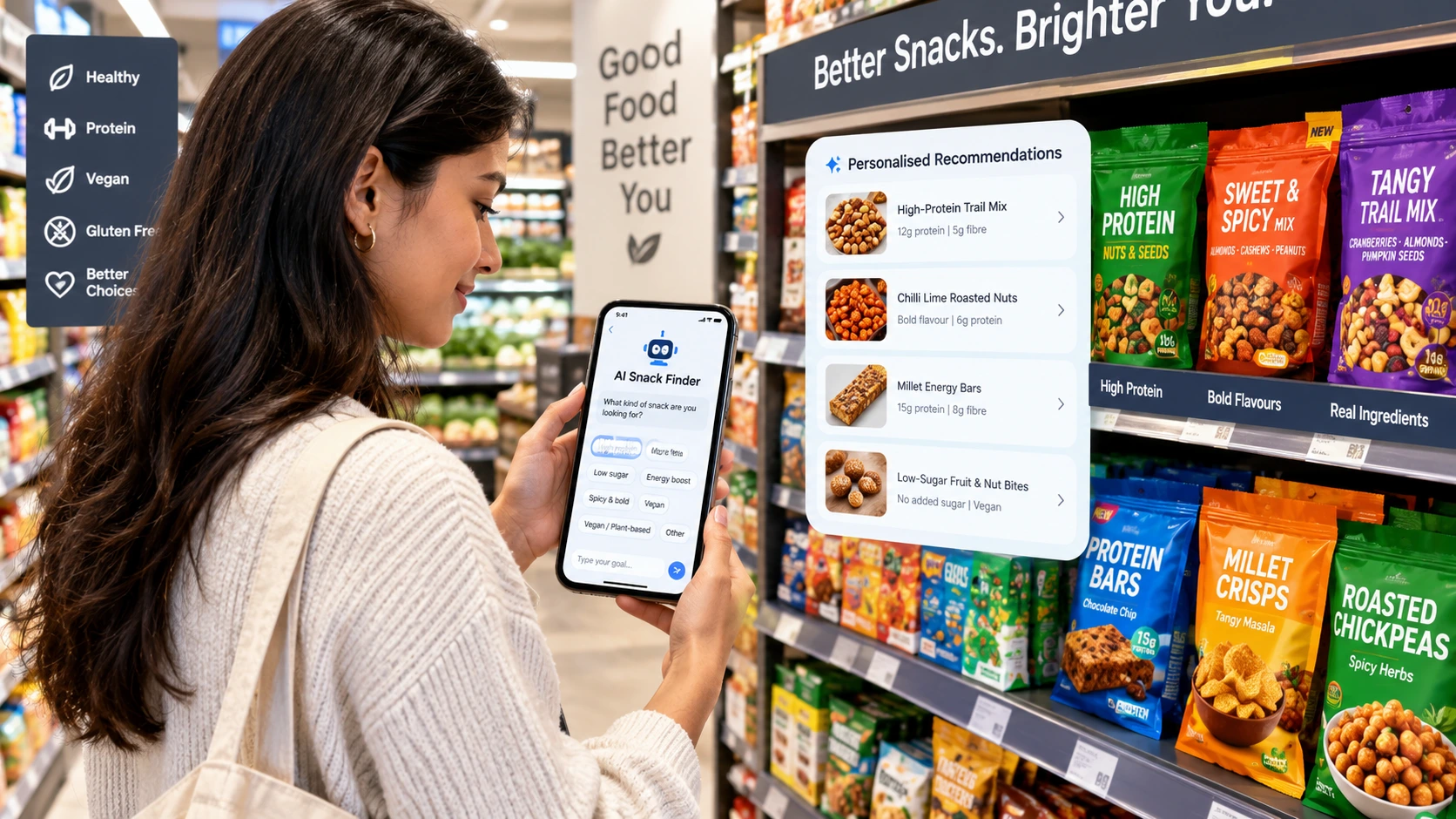
Snacking is moving beyond simple cravings. New consumer research in the United States shows that people are increasingly using AI tools to find snacks based on personal needs such as protein, fibre, energy, lower sugar or indulgence. At the same time, younger consumers are asking for stronger flavours, including sweet-and-spicy, tangy and briny combinations.
The main story: snacks are becoming more personal
- The traditional snack market was built around broad categories:
- Chips
- Biscuits
- Cookies
- Chocolate
- Namkeen
- Protein bars
- The new direction is more specific.
- Consumers are increasingly looking for snacks that match a particular purpose:
- More protein
- More fibre
- Longer-lasting energy
- Lower sugar
- Better portion control
- Emotional comfort
- According to reporting based on research by Conagra Brands and Circana, Americans are increasingly asking AI tools what to snack on, rather than simply searching for a familiar brand or category.
- This means the snack decision may begin with a question such as:
- “What is a high-protein evening snack?”
- “What can I eat before exercise?”
- “Which snack has more fibre and less sugar?”
- “What can I eat when I want something spicy but not too heavy?”
Why this trend is growing now
- Consumers are dealing with more fragmented food routines:
- Work-from-home schedules
- Late office hours
- On-the-go eating
- Fitness goals
- Weight-management concerns
- Irregular meal timing
- Because of this, snacks are no longer treated only as “extra food.”
- They are increasingly being used to solve a specific need:
- A quick breakfast replacement
- A mid-afternoon energy boost
- A post-workout option
- A comfort food moment
- A controlled indulgence
- The growth of weight-loss medications and increasing interest in health-focused eating are also pushing brands to offer foods with more protein, fibre and nutritional density.
Key facts from the latest snack research
- Conagra and Circana analysed more than 53 million shopping transactions across about 17,000 snack products in the United States.
- The US snack sector generates approximately $198.2 billion in annual retail sales.
- The category is growing around 1.4 times faster than the broader food market, according to the report.
- Research also found that:
- Younger consumers are driving demand for bolder flavours.
- Protein and fibre are becoming more important purchase signals.
- Traditional cookie and salty-snack categories are facing pressure.
- Consumers are paying closer attention to ingredient lists.
- These figures show that snacking is not a small side category. It is a major food-business battleground.
The new flavour direction: bolder and more complex
- Health does not mean bland anymore.
- Younger consumers, especially Gen Z, are showing interest in:
- Sweet-and-spicy combinations
- Tangy snacks
- Briny flavours
- Sour-seasoned foods
- Chilli-fruit combinations
- Smoky and fermented notes
- This creates a new opportunity for brands:
- Make the snack nutritious enough for health-conscious consumers.
- Make the flavour exciting enough for social media and repeat purchase.
- This is why products such as chilli-lime nuts, hot honey popcorn, spicy fruit snacks and tangy protein crisps are attracting attention.
The role of AI in food discovery
- AI is becoming a kind of personal food assistant.
- It can help users sort products based on:
- Protein content
- Fibre
- Sugar
- Calories
- Allergens
- Dietary restrictions
- Ingredient preferences
- It can also recommend alternatives:
- A higher-protein option instead of regular biscuits
- A lower-sugar snack instead of candy
- A plant-based product instead of a dairy snack
- This changes how brands compete.
- Previously, companies fought for shelf position and advertising visibility.
- Increasingly, they may also need to compete for inclusion in AI-generated recommendations.
Why Indian food brands should pay attention
- India already has a rich snack culture:
- Murukku
- Mixture
- Roasted chana
- Makhana
- Chivda
- Peanut chikki
- Millet snacks
- Banana chips
- Spiced nuts
- The opportunity is to modernise these familiar foods without removing their cultural identity.
- Possible product directions include:
- High-protein roasted chana
- Fibre-rich millet mixtures
- Low-sugar peanut and seed bars
- Spicy makhana with regional masalas
- Baked snacks inspired by Andhra, Telangana, Kerala or Rajasthan flavours
- Indian brands do not need to copy American snack formats completely.
- They can combine:
- Local ingredients
- Regional flavours
- Better nutrition
- Convenient packaging
- Clear labelling
The business context: “snacking for a purpose”
- The phrase “snacking for a purpose” is becoming important because it allows brands to move away from one-size-fits-all products.
- A company can create separate products for:
- Office energy
- Kids’ lunchboxes
- Travel
- Fitness
- Evening cravings
- Women’s wellness
- Older adults
- This can increase product variety, but it may also create confusion.
- Too many wellness claims can make consumers suspicious.
- A product should clearly explain:
- What it contains
- What benefit it reasonably supports
- How much should be consumed
- Whether the claim is based on meaningful nutrition or only marketing language
What consumers should watch carefully
- AI recommendations are useful, but they are not automatically accurate.
- A chatbot may suggest a product based on incomplete or promotional information.
- Consumers should still check:
- Serving size
- Protein grams
- Sugar
- Sodium
- Saturated fat
- Ingredient order
- Added sweeteners
- “High protein” does not cancel out excessive sugar.
- “Natural” does not automatically mean low-calorie.
- “Baked” does not always mean nutritionally superior.
- The smart choice is to use AI for comparison, not to surrender judgement completely.
The cultural shift
- The future snack is likely to be both functional and emotional.
- People want food that helps them meet a health goal, but they also want:
- Familiar taste
- Comfort
- Texture
- Convenience
- Enjoyment
- That is why the strongest products may not be purely “healthy.”
- They may be products that balance:
- Nutrition
- Strong flavour
- Cultural familiarity
- Affordable pricing
- Easy availability
Strong takeaway
The most important food trend today is not simply the rise of protein snacks or AI apps separately. It is the combination of both.
Consumers are starting to ask technology to help them choose food according to their personal goals, while brands are responding with snacks that are more targeted, more flavourful and more specialised.
“The future snack will not only ask whether you are hungry; it will ask what you need right now.”
The opportunity is large, especially for Indian brands that can combine regional flavours with honest nutrition. But the blank spot is equally clear: if companies overload products with exaggerated health claims, consumers may lose trust. The winners will likely be the brands that make the product genuinely useful, genuinely tasty and easy to understand.
Follow Us On Instagaram