


 By
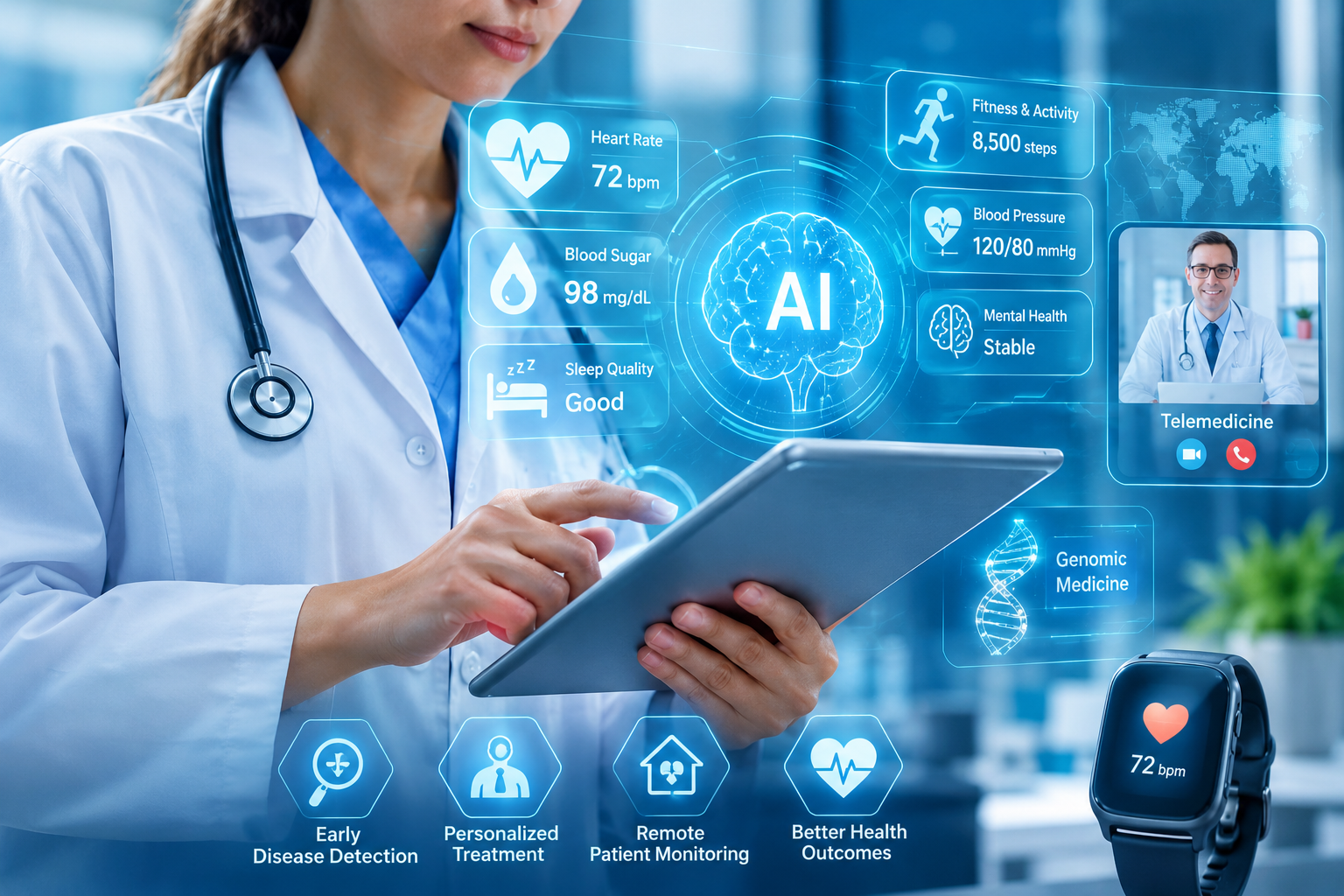
By Artificial Intelligence (AI) is rapidly transforming the healthcare industry, making preventive care more effective than ever before. In 2026, AI-powered preventive healthcare has emerged as one of the biggest global health trends, helping medical professionals detect diseases earlier, personalize treatments, and improve patient outcomes. Rather than waiting until people become seriously ill, healthcare providers are using advanced AI technologies to predict health risks, monitor patients remotely, and recommend lifestyle changes before conditions worsen. This shift from reactive treatment to proactive prevention is revolutionizing the way healthcare is delivered across the world. AI systems can analyze enormous amounts of medical data in just seconds, identifying patterns that might be difficult for humans to recognize. Hospitals, clinics, and research organizations are integrating AI into everyday medical practice to improve diagnostic accuracy, reduce healthcare costs, and ensure patients receive timely care. As healthcare becomes increasingly digital, AI is playing a central role in building smarter and more efficient medical systems.
One of the major reasons AI-powered preventive healthcare is gaining popularity is the increasing prevalence of chronic diseases such as diabetes, hypertension, cardiovascular disease, obesity, and cancer. These illnesses often develop gradually and may not show noticeable symptoms during the early stages. Artificial intelligence helps identify potential warning signs long before patients experience serious complications. By analyzing electronic health records, laboratory reports, medical imaging, genetic information, and lifestyle habits, AI algorithms can estimate an individual’s risk of developing certain diseases. Doctors can then recommend preventive measures such as dietary improvements, regular exercise, medication adjustments, or additional medical screenings. Early intervention significantly increases the chances of successful treatment while reducing hospital admissions and healthcare expenses.
Wearable health technology has become another essential component of AI-powered preventive healthcare. Millions of people now use smartwatches, fitness bands, and wearable medical devices that continuously monitor heart rate, blood oxygen levels, sleep quality, stress levels, physical activity, and even electrocardiogram (ECG) readings. These devices generate real-time health information throughout the day, allowing AI systems to detect unusual trends that may indicate developing medical problems. For example, irregular heart rhythms, sudden changes in blood pressure, or abnormal sleep patterns can trigger alerts that encourage users to consult healthcare professionals. Continuous monitoring allows patients to become more aware of their health while enabling doctors to make informed decisions using accurate and up-to-date information.
Remote patient monitoring is another innovation transforming modern healthcare. Patients with chronic illnesses no longer need to visit hospitals frequently for routine checkups. Instead, medical devices connected to the internet automatically transmit health data to healthcare providers. Blood glucose monitors, blood pressure monitors, pulse oximeters, digital thermometers, and portable ECG devices allow physicians to track patient health from a distance. AI software analyzes this information continuously and immediately identifies readings outside the normal range. Healthcare teams can quickly contact patients, modify treatment plans, or recommend emergency care if necessary. This approach improves convenience, reduces travel costs, minimizes hospital overcrowding, and ensures patients receive timely medical attention without leaving their homes.
Artificial intelligence is also significantly improving medical imaging and diagnostic accuracy. Radiologists traditionally spend hours reviewing X-rays, CT scans, MRI scans, mammograms, and ultrasound images to identify abnormalities. AI-powered diagnostic systems can analyze these images within seconds, highlighting suspicious areas that require closer examination. These intelligent tools assist healthcare professionals by reducing diagnostic errors and improving the early detection of diseases such as lung cancer, breast cancer, fractures, strokes, and neurological disorders. Although AI cannot replace experienced doctors, it serves as a valuable decision-support system that enhances clinical accuracy while reducing workload and improving efficiency.
Personalized medicine has become another major advancement driven by artificial intelligence. Every patient has unique genetics, medical history, environmental exposure, and lifestyle habits, meaning treatments that work for one individual may not be equally effective for another. AI combines genetic testing, clinical records, laboratory results, medication history, and behavioral data to develop customized treatment plans tailored to each patient’s specific needs. This personalized approach helps physicians select the most effective medications while reducing unwanted side effects. Cancer treatment has especially benefited from AI-powered personalized medicine, where doctors can identify therapies most likely to respond to a patient’s unique genetic profile. As genomic sequencing becomes more affordable, personalized healthcare will continue expanding across multiple medical specialties.
Mental health has also become an important focus within AI-powered preventive healthcare. Stress, anxiety, depression, and burnout continue to affect millions of people worldwide, creating an urgent need for accessible mental health support. AI-powered applications now monitor behavioral patterns, mood changes, sleep quality, speech characteristics, and daily activity levels to identify potential mental health concerns. Many digital platforms offer guided meditation sessions, breathing exercises, mindfulness training, and cognitive behavioral therapy techniques designed to help users manage stress and emotional well-being. Virtual mental health assistants can provide immediate support and encourage individuals to seek professional help when necessary. While AI cannot replace psychologists or psychiatrists, these digital tools increase accessibility and promote early intervention.
Telemedicine continues to grow alongside AI-powered preventive healthcare, making quality medical services available to more people than ever before. Patients can consult doctors through secure video appointments, receive digital prescriptions, discuss laboratory reports, and obtain specialist opinions without visiting healthcare facilities. Telemedicine is particularly valuable for elderly individuals, rural populations, and patients with mobility limitations who may face challenges accessing traditional healthcare services. Artificial intelligence further enhances telemedicine by assisting doctors with patient triage, symptom analysis, appointment scheduling, medical documentation, and treatment recommendations. This combination of AI and virtual healthcare improves efficiency while reducing waiting times and increasing patient satisfaction.
Despite the remarkable benefits of AI-powered preventive healthcare, several important challenges must be addressed to ensure responsible implementation. Protecting patient privacy remains one of the highest priorities because AI systems rely on large amounts of sensitive medical information. Healthcare organizations must invest in advanced cybersecurity measures and comply with strict data protection regulations to safeguard confidential patient records. Another challenge involves ensuring AI algorithms remain unbiased and accurate across diverse populations. If AI systems are trained using incomplete or unrepresentative datasets, they may produce inaccurate recommendations for certain groups of patients. Healthcare professionals must continue validating AI systems through rigorous clinical testing while maintaining human oversight during medical decision-making. Artificial intelligence should support doctors rather than replace their expertise and clinical judgment.
Looking toward the future, AI-powered preventive healthcare is expected to become an essential part of everyday life. Emerging technologies such as smart clothing embedded with health sensors, digital twins that simulate patient responses to treatment, robotic-assisted surgeries, advanced genomic medicine, and predictive disease modeling will further transform healthcare delivery. Continuous health monitoring will enable earlier diagnosis, more accurate treatment planning, and improved long-term disease prevention. Governments, healthcare providers, technology companies, and researchers are working together to build healthcare systems that are more efficient, affordable, and patient-centered. As these innovations become increasingly accessible, individuals will gain greater control over their health through personalized recommendations and real-time medical insights. AI-powered preventive healthcare represents a major step toward a future where diseases are detected earlier, treatments become more precise, healthcare costs decrease, and millions of people enjoy healthier and longer lives through smarter, technology-driven medical care.
Follow Us On Instagram