 By
By Apple HomeView: How Apple’s New Smart Home Technology Could Transform Everyday Living
Apple is taking another major step into the smart-home electronics market with the introduction of Apple HomeView, a new smart display designed to bring home entertainment, voice assistance, and connected devices together in one place. Announced on October 13, 2026, HomeView is part of Apple’s latest push to make everyday home technology more convenient, intelligent, and connected.
Alongside HomeView, Apple has introduced updates to its HomePod mini and Apple TV 4K, highlighting the company’s growing interest in creating a seamless smart-home experience. These announcements could make Apple an increasingly important competitor in the connected-home market.
What Is Apple HomeView?
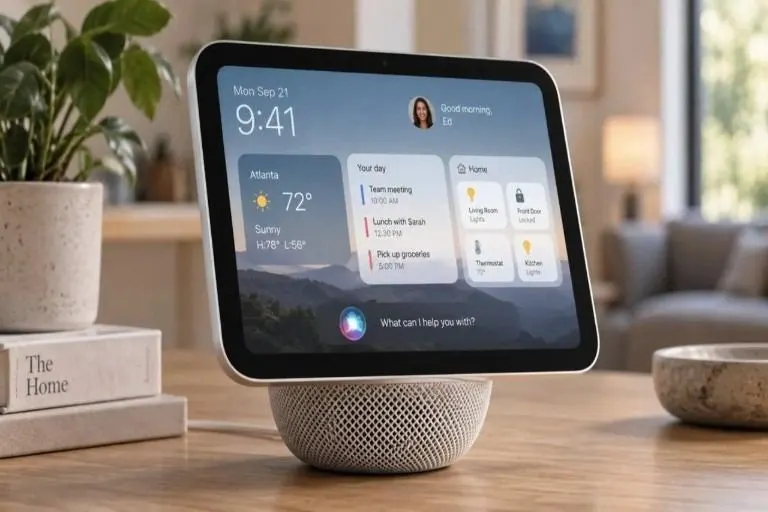
Apple HomeView is a smart display designed to act as a central control point for compatible smart-home devices. According to launch coverage, it features a 7-inch display and integrates with Apple’s Home app and Siri AI.
Users can interact with compatible home accessories, check connected cameras, manage lighting, adjust thermostats, and access supported entertainment features. The device is designed to make everyday tasks easier without requiring users to reach for their smartphones every time they want to control something at home.
With a reported starting price of $299 in the United States, HomeView enters a competitive category that already includes smart displays from Amazon and Google. Its success will depend on how effectively it combines convenience, compatibility, and Apple’s familiar software experience.
Siri AI Brings More Intelligence to the Home
Voice assistants have become an important part of modern electronics. Apple’s latest smart-home direction places Siri AI at the center of the experience, allowing users to interact with supported devices through voice commands.
Imagine asking your assistant to turn off the lights, check the front-door camera, or adjust the room temperature. Instead of opening multiple applications, you could manage several everyday tasks through a connected interface.
The real value will depend on how accurately Siri understands requests and how reliably it controls compatible accessories. A smart display must do more than respond to simple commands; it should help users manage their homes with minimal effort.
Apple’s approach also emphasizes integration with its existing ecosystem, potentially making HomeView particularly attractive to people who already use Apple devices.
Updated HomePod mini and Apple TV 4K
HomeView is not the only product in Apple’s latest smart-home announcements. The company has also introduced a refreshed HomePod mini and an updated Apple TV 4K.
The HomePod mini 2 continues Apple’s focus on compact smart speakers, combining music playback with smart-home functionality. The refreshed Apple TV 4K strengthens the entertainment side of the ecosystem, with updated hardware and Siri-related features highlighted in launch coverage.
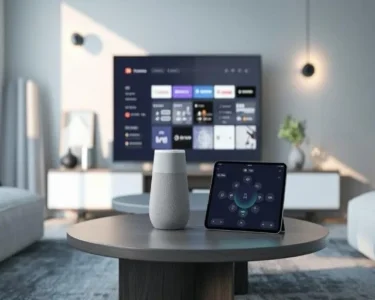
Together, these products could help users build a more connected living space. For example, a household could use Apple TV for entertainment, HomePod mini for music and voice interaction, and HomeView as a convenient dashboard for compatible smart accessories.
Apple has also announced the Apple Home Collection, a lineup of smart-home accessories developed with partners including LG and Schneider Electric. This expansion is important because a smart-home platform becomes more useful when consumers have a wider choice of compatible products.
Benefits for Everyday Users
One of the biggest potential advantages of Apple’s smart-home strategy is convenience. A central display can make it easier to manage connected devices, especially for families who want a shared interface rather than relying on one person’s phone.
Smart-home technology can also support routines, such as adjusting lights in the evening or checking security devices before leaving home. The availability of these features depends on compatible accessories and software support.
For Apple users, integration across devices may be another advantage. However, buyers should check compatibility, regional availability, and the specific features supported by their existing equipment before investing in a new setup.
Challenges and Things to Consider
Despite its potential, HomeView faces several challenges. Its reported $299 starting price may be expensive for consumers who only need basic smart-home controls. More affordable alternatives are already available in the market.
Compatibility is another important consideration. Buyers should confirm that their preferred cameras, lights, locks, and other accessories work with Apple’s platform. Privacy and security settings also deserve attention when installing connected cameras, microphones, and home-control devices.
Additionally, the quality of the Siri AI experience will be crucial. Users will expect accurate responses, dependable automation, and useful functionality rather than voice commands that work only in limited situations.
Conclusion: Is Apple’s Smart Home Push Worth Watching?
Apple HomeView represents an interesting development in consumer electronics because it brings smart displays, voice assistance, home automation, and entertainment closer together. Combined with the updated HomePod mini, Apple TV 4K, and new accessory partnerships, it signals a broader effort to strengthen Apple’s position in connected living.
Whether HomeView becomes a popular household device will depend on its real-world performance, compatibility, pricing, and the usefulness of Siri AI.
For technology enthusiasts and existing Apple users, this launch is worth watching. As smart homes continue to evolve, the next big innovation may not be a single gadget, but the way multiple devices work together to make everyday life simpler.