


 By
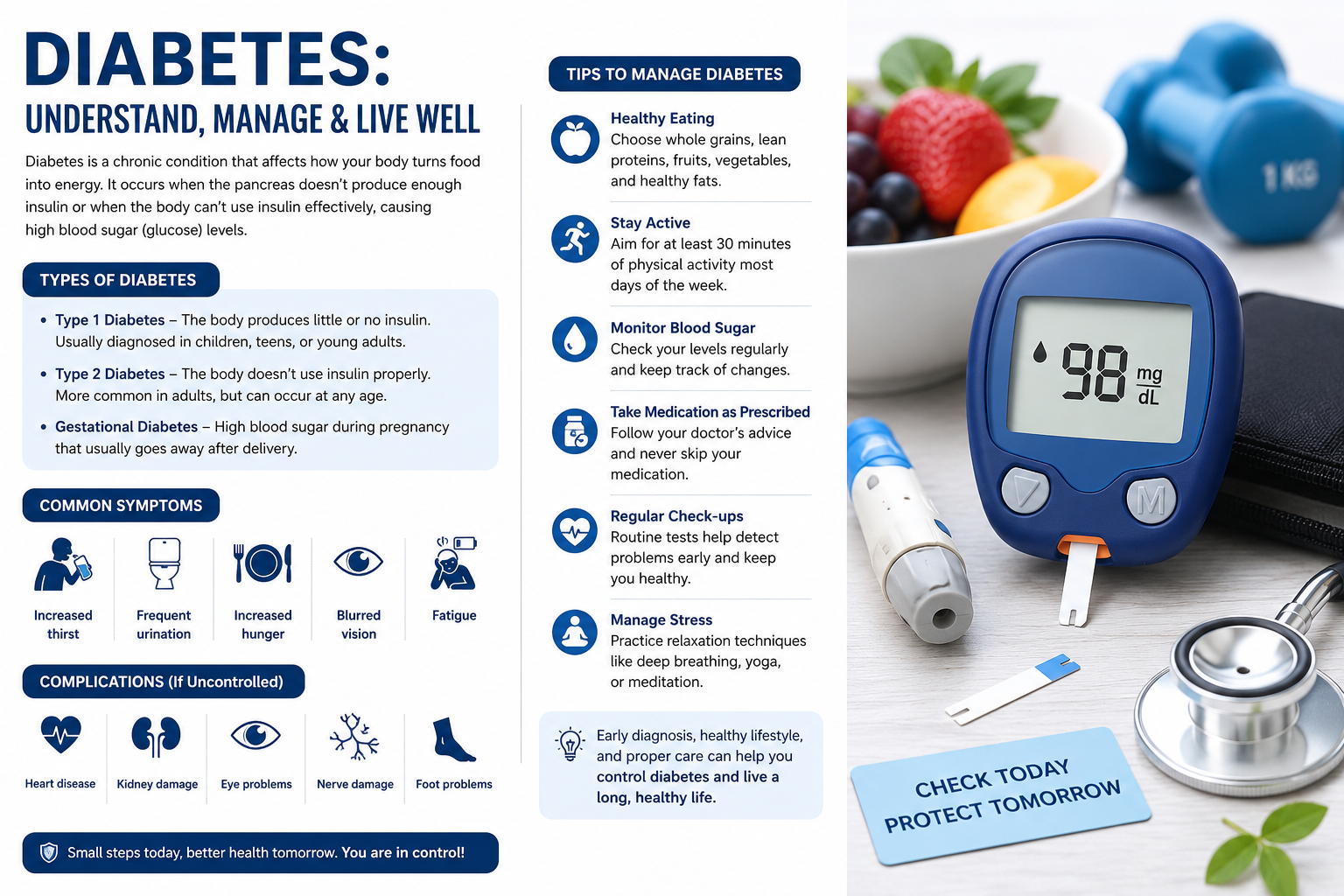
By Diabetes continues to be one of the most common chronic health conditions worldwide. According to global health experts, millions of people are living with diabetes, and the number continues to rise every year due to sedentary lifestyles, unhealthy eating habits, obesity, and genetic factors. While diabetes cannot always be prevented, it can be managed successfully through healthy lifestyle choices, regular monitoring, and proper medical care.
Whether you have Type 1 Diabetes, Type 2 Diabetes, or are at risk of developing the condition, making small changes to your daily routine can significantly improve blood sugar control and reduce the risk of serious complications.
What is Diabetes?
Diabetes is a condition in which the body cannot properly regulate blood glucose (blood sugar) levels. This happens because the body either does not produce enough insulin or cannot effectively use the insulin it produces.
Insulin is a hormone made by the pancreas that allows glucose from food to enter the body’s cells and provide energy. Without enough insulin or proper insulin function, glucose builds up in the bloodstream, causing high blood sugar levels.
Common Symptoms of Diabetes
Many people ignore the early warning signs of diabetes until complications develop. Some of the most common symptoms include:
- Frequent urination
- Excessive thirst
- Increased hunger
- Unexplained weight loss
- Constant fatigue
- Blurred vision
- Slow healing wounds
- Frequent infections
- Tingling or numbness in hands and feet
If these symptoms persist, consult a healthcare professional and get your blood sugar tested.
Why Managing Diabetes is Important
Poorly controlled diabetes can damage nearly every organ in the body. Long-term high blood sugar increases the risk of:
- Heart disease
- Stroke
- Kidney disease
- Vision loss and blindness
- Nerve damage
- Foot ulcers
- Poor wound healing
The good news is that maintaining healthy blood sugar levels greatly reduces these risks.
Healthy Eating Habits for Diabetes
A balanced diet is one of the most effective ways to control diabetes.
Experts recommend including:
- Fresh vegetables
- Whole grains
- High-fiber foods
- Lean protein such as fish, eggs, and chicken
- Healthy fats from nuts and seeds
- Fresh fruits in controlled portions
Limit foods that are high in:
- Added sugar
- Sugary beverages
- Refined carbohydrates
- Deep-fried foods
- Processed snacks
- Excess salt
Eating meals at consistent times throughout the day can also help stabilize blood sugar levels.
Stay Physically Active
Regular exercise improves insulin sensitivity and helps lower blood sugar naturally.
Adults should aim for at least 150 minutes of moderate physical activity every week, including:
- Brisk walking
- Cycling
- Swimming
- Yoga
- Strength training
- Light stretching
Even a 15–20 minute walk after meals can help reduce post-meal blood sugar spikes.
Monitor Blood Sugar Regularly
Regular glucose monitoring helps people understand how food, medication, exercise, and stress affect their blood sugar levels.
Keeping a daily record allows healthcare providers to adjust medications when necessary and helps prevent dangerously high or low blood sugar.
Stay Hydrated
Drinking enough water is especially important for people with diabetes. Proper hydration supports kidney function and helps remove excess glucose through urine.
Aim for 2–3 liters of water daily, unless your doctor recommends otherwise.
Avoid sugary drinks and excessive soft drinks.
Manage Stress and Sleep
Chronic stress and poor sleep can increase blood sugar levels by affecting hormone balance.
Healthy habits include:
- Sleeping 7–8 hours each night
- Practicing meditation
- Deep breathing exercises
- Spending time outdoors
- Maintaining a regular sleep schedule
Reducing stress not only benefits mental health but also improves diabetes control.
Regular Health Check-ups
People living with diabetes should schedule regular medical check-ups to monitor their overall health.
Important tests include:
- HbA1c every 3–6 months
- Blood pressure checks
- Kidney function tests
- Eye examinations
- Foot examinations
- Cholesterol testing
Early detection of complications can prevent serious health problems.
Final Thoughts
Living with diabetes does not mean giving up an active or fulfilling life. With healthy eating, regular exercise, proper medication, routine blood sugar monitoring, and regular medical check-ups, most people with diabetes can successfully manage their condition and reduce the risk of complications.
The key is consistency. Small daily improvements often lead to significant long-term health benefits. By making informed lifestyle choices today, individuals with diabetes can enjoy healthier, more energetic lives in the years ahead.
Follow Us On Instagram