


 By
By IoT Security in 2026: Protecting Connected Devices from Emerging Cyber Threats
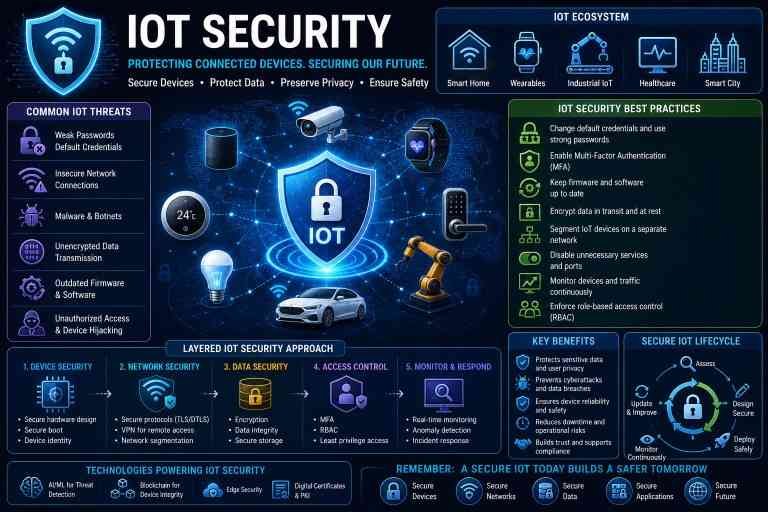
The Internet of Things (IoT) has transformed the way people interact with technology. From smart home devices and wearable fitness trackers to connected industrial machines and healthcare equipment, billions of IoT devices are connected to the internet, making life more convenient and businesses more efficient. However, this rapid growth has also expanded the cyberattack surface, making IoT security one of the most important cybersecurity priorities in 2026.
IoT Security refers to the technologies, policies, and best practices used to protect internet-connected devices, communication networks, and the data they generate from unauthorized access, malware, and cyberattacks. A strong IoT security strategy helps ensure device integrity, user privacy, operational continuity, and compliance with industry regulations.
Why IoT Security Matters
IoT devices continuously collect, process, and exchange sensitive information. Smart thermostats, surveillance cameras, wearable health monitors, connected vehicles, and industrial sensors all communicate through networks and cloud platforms. If these devices are compromised, attackers can steal sensitive data, disrupt operations, or use infected devices to launch larger cyberattacks.
Common IoT security threats include weak passwords, outdated firmware, insecure APIs, malware, botnet attacks, data interception, and unauthorized remote access. As organizations continue adopting smart technologies across manufacturing, healthcare, transportation, and retail, securing IoT ecosystems has become essential for maintaining business continuity and customer trust.
Protecting Smart Home Devices
Smart homes now include connected security cameras, smart locks, lighting systems, voice assistants, televisions, thermostats, and household appliances. While these devices improve convenience and automation, they can become entry points for cybercriminals if left unsecured.
To enhance smart home security, users should:
- Change default usernames and passwords immediately.
- Enable Multi-Factor Authentication (MFA) whenever available.
- Install firmware and software updates regularly.
- Disable unnecessary remote access features.
- Connect IoT devices to a separate Wi-Fi network from computers and work devices.
- Monitor connected devices for unusual activity.
These simple measures significantly reduce the risk of unauthorized access and protect home networks.
Securing Wearable Devices
Wearable technology such as smartwatches, fitness trackers, and connected medical devices continuously collect health information, activity data, and location details. Because these devices often synchronize with smartphones and cloud services, protecting them is critical.
Best practices include:
- Download applications only from trusted app stores.
- Keep device firmware updated.
- Enable device encryption where supported.
- Review application permissions regularly.
- Pair wearables only with trusted smartphones and computers.
- Use secure authentication methods for associated cloud accounts.
Healthcare organizations should also ensure wearable devices comply with privacy regulations while protecting sensitive patient information.
Securing Connected Industrial Machines
Industrial Internet of Things (IIoT) technologies have transformed manufacturing, logistics, energy production, and critical infrastructure by connecting sensors, robotic equipment, and industrial control systems.
However, compromised industrial devices can interrupt production, damage equipment, and impact worker safety. Organizations should strengthen Industrial IoT security by:
- Separating Operational Technology (OT) networks from corporate IT networks.
- Implementing Role-Based Access Control (RBAC).
- Continuously monitoring connected industrial devices.
- Performing routine firmware updates.
- Conducting vulnerability assessments.
- Restricting remote administrative access.
These controls help maintain operational reliability while reducing cybersecurity risks.
Device Encryption and Secure Authentication
Encryption is one of the strongest defenses against unauthorized access to IoT data. Encrypting data both at rest and in transit ensures that sensitive information remains protected even if communications are intercepted.
Organizations should also implement secure authentication measures such as:
- Multi-Factor Authentication (MFA)
- Strong password policies
- Device identity verification
- Digital certificates
- Automatic account lockouts after repeated failed login attempts
Combining encryption with strong authentication significantly strengthens IoT security.
AI-Powered Threat Detection
Artificial Intelligence is transforming IoT security by enabling real-time threat detection and automated incident response. AI-powered security platforms continuously analyze millions of device interactions to identify unusual behavior, malware infections, and suspicious network traffic.
Machine learning algorithms recognize normal device behavior and quickly detect anomalies that traditional security tools may miss. Automated response capabilities can isolate compromised devices, block malicious communications, and alert security teams before attacks spread throughout the network.
Emerging IoT Security Trends in 2026
The future of IoT security is being driven by Zero Trust architecture, secure-by-design hardware, automated firmware management, and cloud-native security platforms. Manufacturers are increasingly integrating security features directly into devices during development rather than adding them later.
Organizations are also investing in centralized IoT management platforms that provide complete visibility into connected devices, automate compliance monitoring, and simplify large-scale security management across enterprise environments.