 By
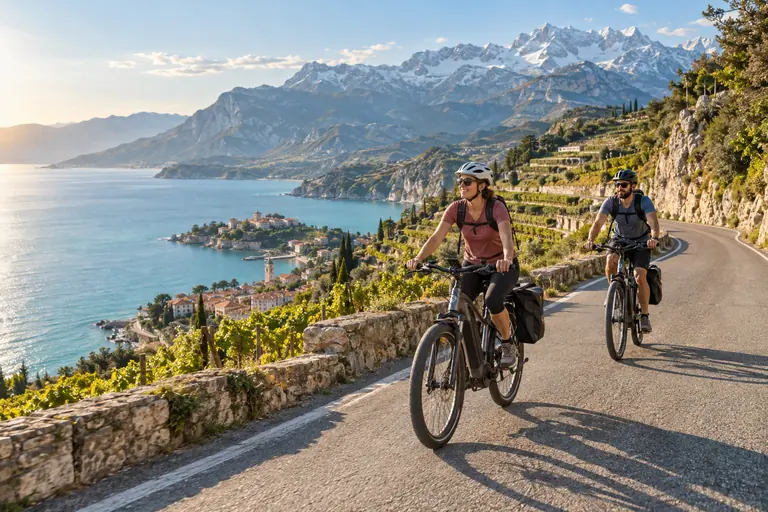
By E-Biking and Open-Road Tours are transforming the way travelers experience Europe. Instead of observing landscapes through a bus window, visitors can now ride along coastal roads, mountain valleys and peaceful countryside routes at a comfortable pace. Electric assistance makes longer journeys and challenging climbs accessible to more people, while open-road itineraries combine cycling with hiking, sailing, food experiences and cultural exploration.
This growing travel style is especially popular in Croatia, Portugal and the Alps, where scenic roads connect historic towns, vineyards, islands and mountain villages. According to the European Cyclists’ Federation, cycling activity recorded across the EuroVelo network increased by 4% in 2025 compared with 2024. Its 2026 tourism outlook also identifies personalized cycling experiences, electric bikes and quieter off-the-beaten-track journeys as important trends shaping the sector.
Why E-Bike Tourism Is Booming
Traditional cycling holidays often require considerable fitness and experience. E-bikes remove part of that barrier by providing motor assistance while the rider pedals. Travelers can manage hills, cover greater distances and remain together even when group members have different fitness levels.
Modern touring e-bikes commonly include mid-drive motors, multiple assistance settings and removable batteries. Depending on the terrain, rider weight, assistance level and weather, some tour operators now advertise approximate ranges of 120 to 180 kilometres under suitable conditions. Actual performance can vary, so daily routes should always include a sensible charging plan.
Demand is also being driven by travelers who want slower, more meaningful holidays. Rather than visiting several destinations quickly, an e-bike journey encourages people to stop in small communities, eat at local restaurants and explore places that conventional tours may overlook.
Croatia’s Coastal Roads and Island Adventures
Croatia has become one of Europe’s standout cycling destinations because it combines Adriatic scenery with medieval towns, vineyards and island landscapes. Popular journeys explore Istria, the Dalmatian Coast, Dubrovnik and the islands near Split.
One of the most appealing formats is a bike-and-boat tour. Travelers cycle across an island during the day and then board a small vessel for accommodation or transportation to the next destination. It creates a balanced multi-activity holiday that includes riding, sailing, swimming and sightseeing.
Adventure-focused cyclists can also consider sections of the Trans Dinarica route. Its Croatian options travel through areas such as Velebit Nature Park, Pag Island and coastal locations near Zadar and Split. The route’s official information lists nine Croatian stages covering approximately 514 kilometres, making it suitable for a longer open-road adventure when planned carefully.
Spring and early autumn are generally attractive periods for Croatian cycling. Temperatures are often more comfortable than during the busiest summer weeks, and popular coastal destinations may feel less crowded.
Portugal’s Atlantic Routes and Historic Towns
Portugal offers a different style of e-bike journey. Riders can follow Atlantic coastlines, cross wine-producing regions and connect centuries-old towns through rural roads and dedicated cycling sections.
The Algarve is popular for its beaches, cliffs and coastal scenery. Northern Portugal offers green landscapes, vineyards and routes connecting Porto with destinations toward Spain. Porto-to-Santiago itineraries are widely available as guided or self-guided journeys, with some tours following sections of the Portuguese Camino.
E-bikes are especially helpful on Portugal’s rolling terrain. They allow travelers to enjoy hilly historic centres and countryside climbs without turning every day into an endurance challenge. A journey can also incorporate surfing, walking tours, wine tasting or kayaking, making Portugal an excellent destination for multi-activity road holidays.
Summer temperatures can become intense in some areas. Spring and autumn usually offer more comfortable conditions, although riders should check regional weather before booking.
Crossing the Alps With Electric Assistance
The Alps once appeared suitable only for highly trained cyclists, but electric assistance and carefully designed routes have changed that perception. Riders can now explore alpine valleys, lakes and mountain towns without attempting the steepest professional cycling passes.
The Alpe-Adria Cycle Route is a popular example. It connects Salzburg in Austria with Grado on Italy’s Adriatic coast, passing through alpine scenery and historic settlements. Commercial itineraries commonly divide the journey into manageable daily stages, and some use trains to bypass difficult mountain sections.
Other possibilities include routes through Austria, Switzerland, northern Italy, Slovenia and southern Germany. Travelers can combine cycling with hiking, cable-car trips, lake activities and regional food experiences.
Weather is an important consideration in alpine areas. Even during warmer months, conditions can change quickly, and higher routes may experience rain, strong winds or low temperatures. Layered clothing, waterproof equipment and flexible scheduling are essential.
Guided Versus Self-Guided Tours
Guided tours work well for people who want local expertise and group support. A guide usually manages navigation, provides cultural information and assists when mechanical or logistical problems arise. These packages may also include a support vehicle.
Self-guided tours provide greater independence. Operators commonly arrange accommodation, luggage transfers, rental bikes and digital route instructions while allowing travelers to ride at their own pace.
Before choosing either format, examine what the package includes. Check the e-bike model, battery capacity, daily distance, elevation gain, hotel standard, luggage limits, emergency assistance and cancellation conditions. Many European tours cover approximately 40 to 70 kilometres per day, although easier itineraries may offer shorter stages.
How to Prepare for an Open-Road E-Bike Journey
Travelers should practice riding an e-bike before beginning a multi-day tour. Electric bikes can be heavier than standard bicycles, and their acceleration and braking may feel different.
A helmet, reflective clothing, gloves, water bottle and compact first-aid kit are essential. Riders should download offline maps, carry a portable charger for their phone and confirm where the bike battery can be recharged. Travel insurance should cover cycling activities and emergency medical assistance.
Battery use also requires planning. Higher assistance modes consume energy more quickly, particularly on steep climbs. Using lower assistance on flat roads and saving stronger support for hills can extend the available range.
A More Sustainable Way to Experience Europe
E-biking cannot make every holiday completely emission-free, especially when flights and support vehicles are involved. However, replacing frequent car journeys with cycling can reduce local transport emissions and congestion. Cycling tourists also tend to spend more time in smaller towns, supporting locally owned accommodation, cafés and activity providers.
The European Cyclists’ Federation notes that cycling tourism can help distribute visitors beyond crowded destinations, connect travelers with local communities and benefit rural economies. These advantages align closely with the growing demand for authentic and responsible travel.
The Future of Active Road Travel
E-Biking and Open-Road Tours are moving from a specialist activity into mainstream European tourism. Better cycling infrastructure, improved batteries, digital navigation and flexible tour formats are making these journeys easier to plan.
Croatia delivers island and coastal adventures, Portugal combines Atlantic scenery with culture and cuisine, and the Alps provide dramatic landscapes with routes for different experience levels. For travelers seeking freedom, activity and closer contact with a destination, an e-bike tour offers one of the most rewarding ways to explore Europe’s open roads.
Latest facts verified using the European Cyclists’ Federation’s 2026 cycling-tourism outlook, EuroVelo industry updates, and the Trans Dinarica Croatia route.